Multilateralism: Down, but Not Out
Saul Kenny
Reports of international cooperation’s death are greatly exaggerated
You might have heard that the international system built after World War Two is crumbling. And there are plenty of factors why: emerging powers are reshaping political, economic, and cultural dynamics; conflict, the climate crisis, and artificial intelligence are testing the limits of cooperation; while superpowers are flexing their influence.
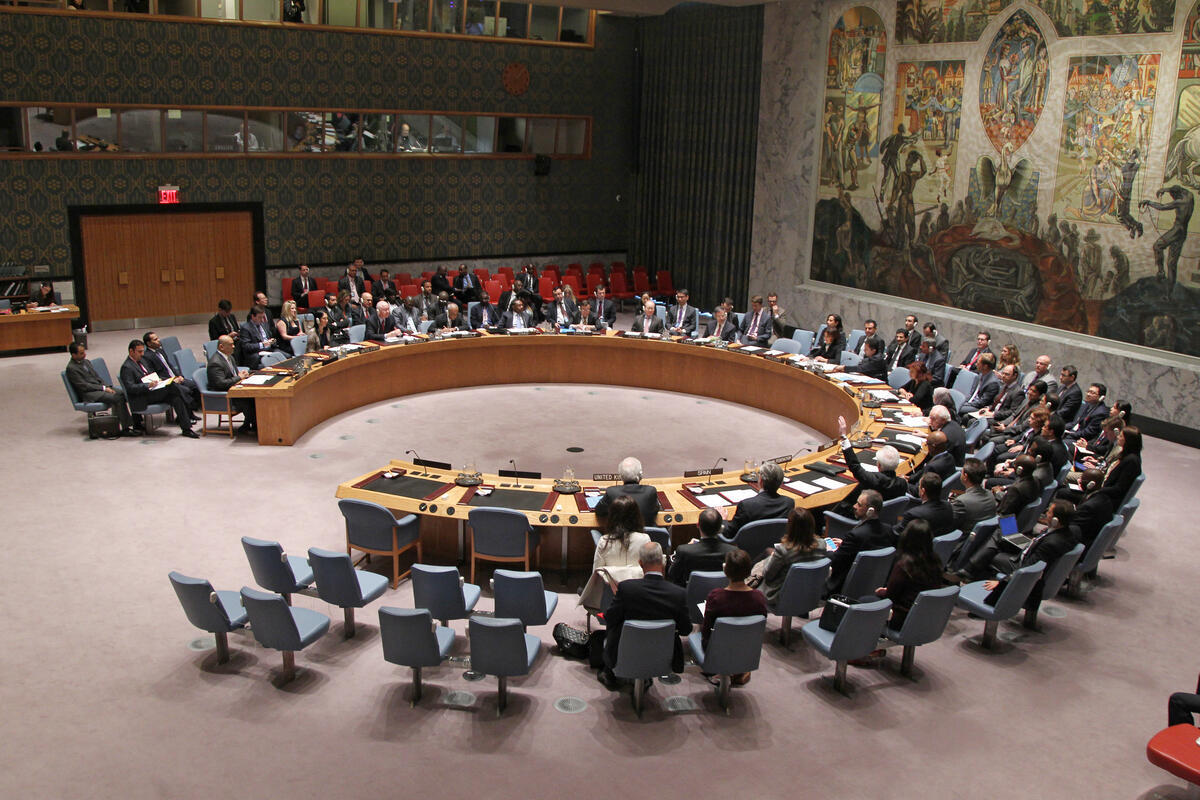
What of the United Nations? Founded over eight decades ago with a promise of peace, development, and human rights, today it is haemorrhaging credibility; struggling to meet the expectations of its members, the aspirations of its Charter, and the hopes of its peoples.
But reports of international cooperation’s death are greatly exaggerated, to paraphrase Mark Twain. Even as the international arena becomes more brutish, countries are still working together. The recent annual gathering of the UN in New York showed that there is appetite for ensuring multilateralism lives on – but that it just needs a rethink.
International Cooperation: Here to Stay
It is undeniable that we are living through a period of transition: multipolarity, the trampling of norms, and the resurgence of an ideology based on the supremacy of the nation state are re-shaping international relations.
In response, countries are hedging; clubbing together along the lines of shared interests and values. New coalitions and alliances are multiplying – thirty have been launched in the past decade alone – with middle powers engaging the most in this display of polyamorous geopolitics. But at the centre of this reconfigured international scene is not an abandonment of multilateralism: these loose clubs still seek authority from the UN. The Gaza Board of Peace found validation in a UN Security Council resolution, for example, and a coalition to phase out fossil fuels still wants to influence the UN’s climate process.
And while it is a more unstable world, it is also one that is more interconnected. Last year, trade hit an all-time high; more people have access to the internet than ever before; international migration continues to rise; while the 2026 men’s football World Cup was the most watched in history – and had more teams participating (with efforts underway to expand it further).
So, despite countries’ desires to deepen bilateral ties, and make use of ad hoc coalitions, they still rely on a system that facilitates discussion on shared challenges. For smaller countries, this is a question of survival: universal bodies – and their associated norms, rules, and law – protect them against great-power predation. It is no wonder, therefore, that alongside the rise of “multilateralisms” is a push to not let international organisations atrophy entirely.
Facing Change
Some 160 leaders spoke of UN reform in the UN General Assembly’s Hall in September. This means it was raised more than climate change, artificial intelligence, Gaza or Ukraine. But while consensus on the need to reform is high – what is now needed is the means to achieve it.
Increasingly, small and medium countries are returning to the original mechanism to deliver change: this is Article 109 of UN Charter, which allows for a conference to review and update the UN’s founding document. Interest stems from the fact that such a conference is an opportunity to deliver structural reform of the UN – such as of the Security Council – as well as a chance to renew the organisation’s normative function – like ensuring it can remain as a forum for countries, civil society, and citizens to come together and effectively address common challenges.
Momentum is building. In New York in September, Brazil’s foreign minister, Mauro Vieira, described it as providing “the way” to deliver on the objectives on UN reform of a new initiative launched by Australia, Barbados, Brazil, Canada, the European Union, and Kenya. That same week, Japanese prime minister, Sanae Takaichi, said the “UN Charter… needs to be reviewed” in the General Assembly Hall. They are joined by The Gambia, Honduras, India, Kazakhstan, Kyrgyzstan, North Macedonia, and South Africa, who have all called for the UN Charter to be renewed.
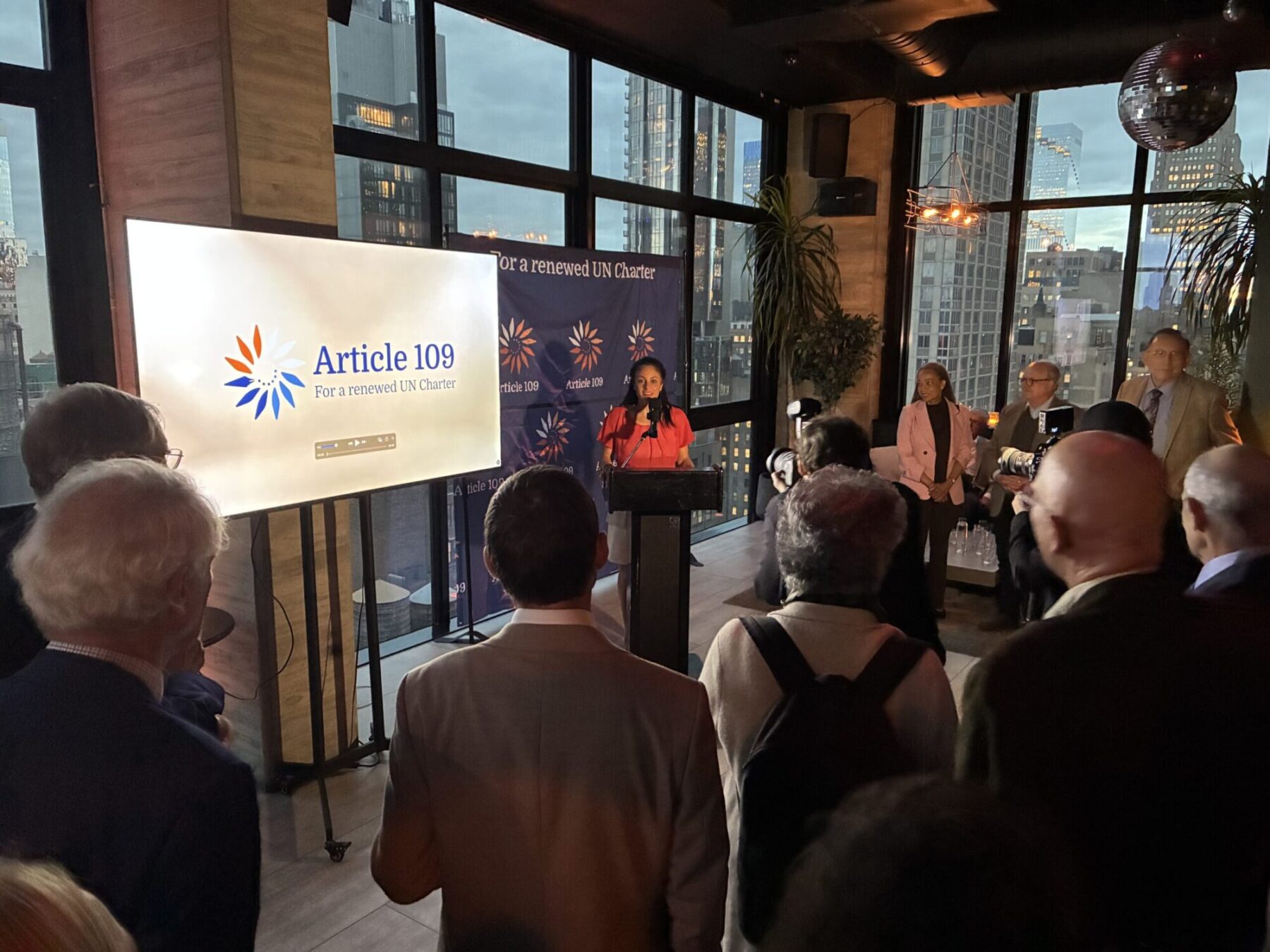
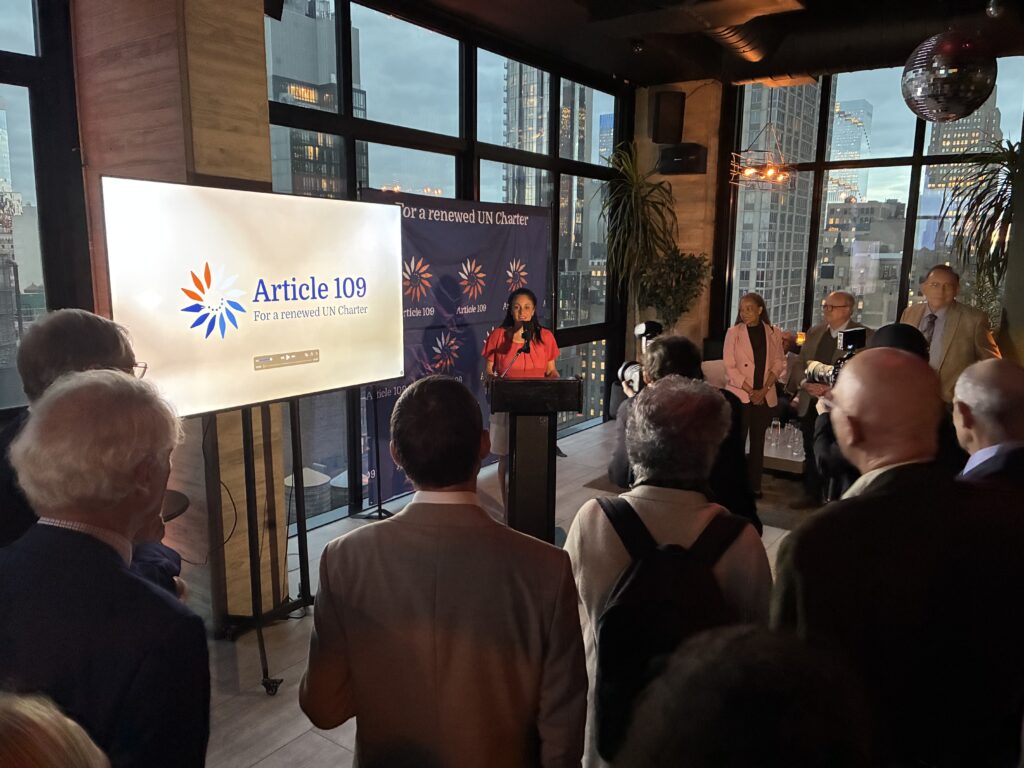
Advocating for this mechanism to be in invoked is at the core of the Article 109 Coalition that launched in New York last year. Today, over 100 organisations have joined or partnered with the Coalition – from international advocacy bodies to grassroots groups. It also counts on the support of former leaders, including the former Prime Minister of New Zealand, Helen Clark, and activists, like South Africa’s Kumi Naidoo.
The movement rests on a simple premise: people across the world believe in countries working together. 70% of people in middle-power countries favour multilateral cooperation. A majority also say they would make sacrifices for a fairer world. Reviewing the UN Charter is an opportunity to translate these aspirations into reality: to use this moment of rupture as an opportunity to build an international order anew; and to refute Thucydides by asserting that the less powerful do not have to “suffer what they must”.
Middle powers, and their peoples, have agency in the face of a changing world. But “nothing can be changed until it is faced” James Baldwin wrote in 1962. What we need now is the courage to face a changing world.
Saul Kenny is Article 109’s communications manager.