The Environment and Climate Cost of Artificial Intelligence
David WilliamsThe contentious development of Project Jupiter in the northern Chihuahuan Desert
The US is in the midst of a data center building binge.
It is difficult to overstate the importance of AI to the US economy. Some estimates even suggest that AI-related investment accounts for between one half and two-thirds of current U.S. economic growth. The economic dependence of the US on AI is so pronounced that David Sacks, until recently the White House’s AI and Crypto Czar, claimed that “stopping progress in AI would be equivalent to halting the U.S. economy”.
In total, the U.S. is projected to spend around $800 billion on AI this year, equivalent to 2–2.5% of GDP and approaching the scale of the national defense budget at 2.9% of GDP. And while the AI market generated an estimated $214 billion in revenue in 2024, this is projected to increase more than six-fold over the next 5 years. Five US companies among the main drivers of AI investments are Amazon, Alphabet, Meta, Microsoft, and Oracle. Taken together, the value of these companies amounts to over $12 trillion. Their AI-related capital expenditures are to amount to over $700 billion this year alone.
AI-related capital expenditures can be broadly divided into data centers, power infrastructure, computing hardware, and software. Data centers are particularly essential because developing and deploying AI models depends on having enormous data and computational resources, which in turn rely on the processing capacity available in data centers. This in part explains the race being waged by the major companies to build AI data centers — the bigger and faster their centers are, the more likely they are to beat the competition.
To support and accelerate the data center building binge, the Trump administration has linked AI infrastructure growth to both national and energy security. The administration has even crafted several executive orders for AI datacenter developers to expedite permitting and planning procedures.
The Resources AI Data Centers Need
The problem is that data centers require vast amounts of energy to power their computations, as well as water to cool their systems and protect from overheating. In 2023, data centers consumed around 4.4% of electrical power in the US, and this is projected to grow to 6.7-12% by 2028. In addition, some data centers consume almost 2 million liters of water per day. Looking toward the future, studies project the AI data center boom could add between 24 and 44 million tons of CO₂ to the atmosphere by 2030 (the equivalent of adding 5 to 10 million cars to the US‘s roads). By then, data centers could also consume between 731 and 1,125 million cubic meters of water (enough to meet the annual household needs of 6 to 10 million people in the US).
Even more concerning, of the over 1,000 data centers planned for the US, 517 will be located in areas already suffering from drought conditions and heat stress — extreme events that are becoming more frequent and more intense with climate change.
Nevertheless, companies are moving forward with plans to build data centers in deserts. There are two rationales for doing so. First, land in the desert is relatively available and affordable compared to other regions in the US with more favorable climatic conditions or more abundant energy supply. Second, some local governments are eager to attract AI data centers because they hope these facilities will generate economic benefits for local communities, particularly in areas that have been neglected in terms of economic development and other resources.
Project Jupiter in Doña Ana County
Unsurprisingly, however, many local communities aren’t convinced.
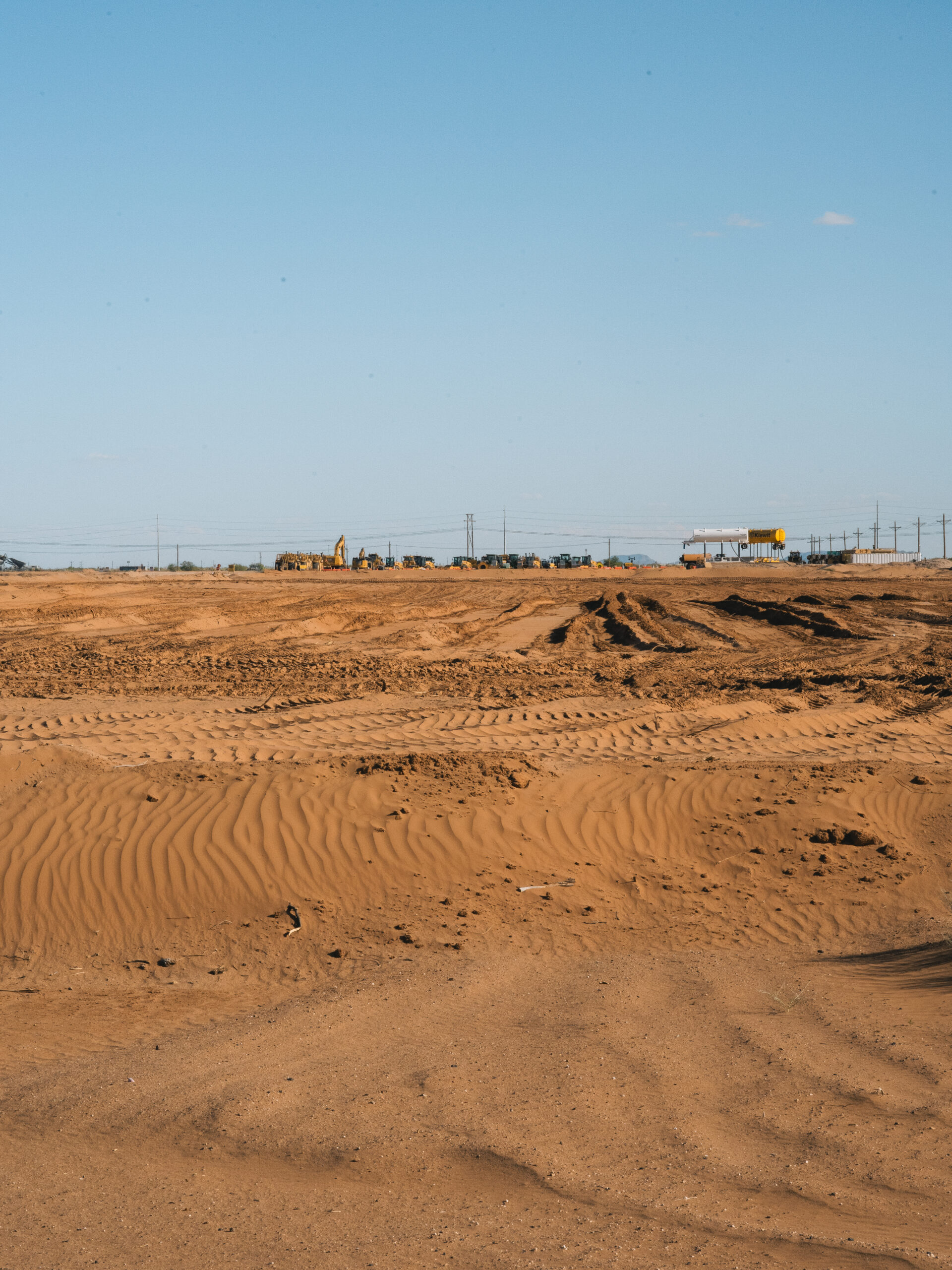
One planned AI data center that has drawn significant local opposition is Project Jupiter, under construction near the unincorporated community of Santa Teresa in Doña Ana County, New Mexico. Santa Teresa is located along the US–Mexico border in the northern Chihuahuan Desert. The region has long grappled with water and energy constraints. Prolonged drought, declining mountain snowpack, and climate change have placed increasing pressure on already limited water supplies. For years, residents of Santa Teresa and surrounding communities have fought over access to clean, safe, and reliable drinking water. The prospect of a large water-consuming data center in close proximity is therefore particularly contentious.

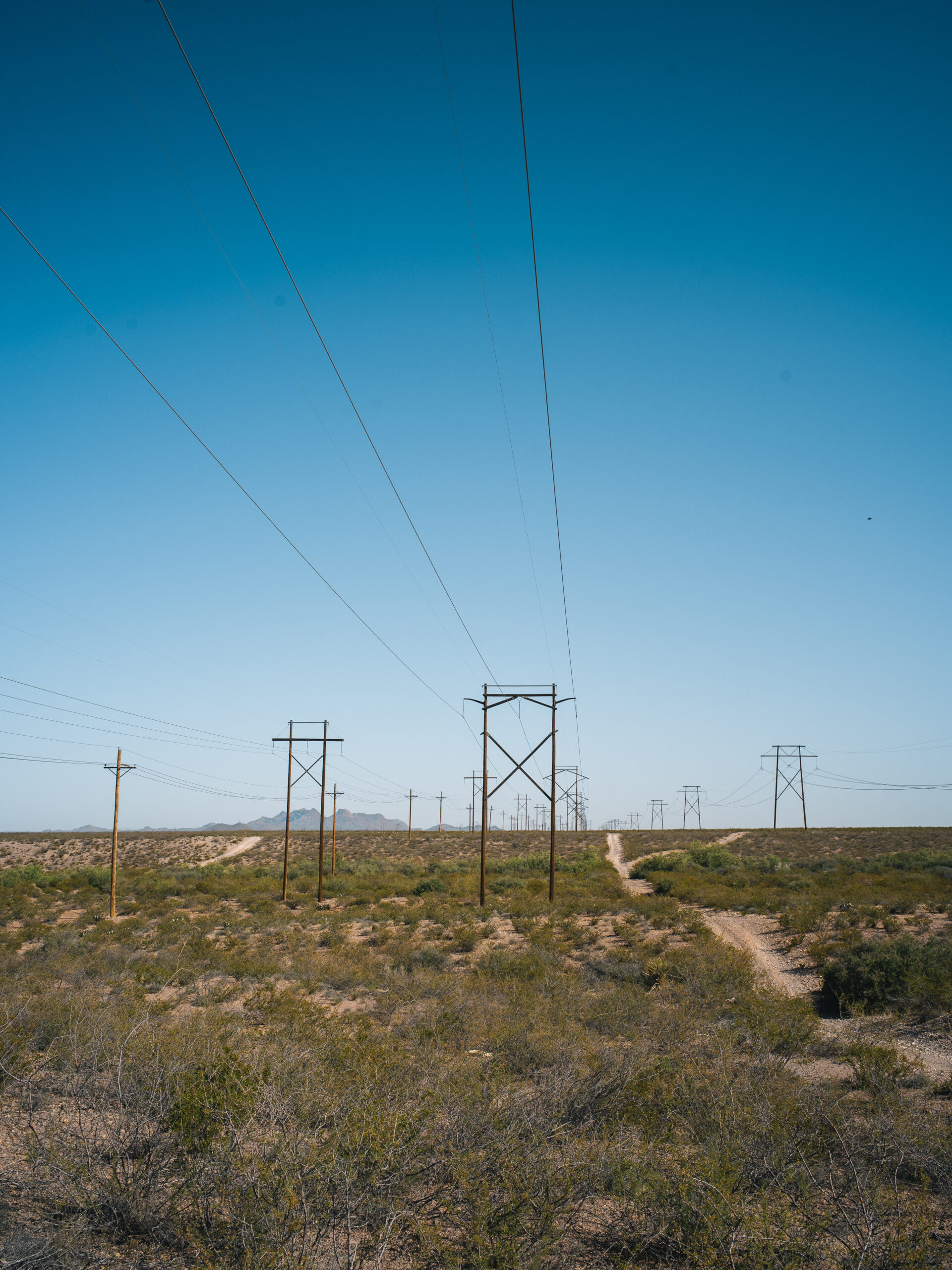
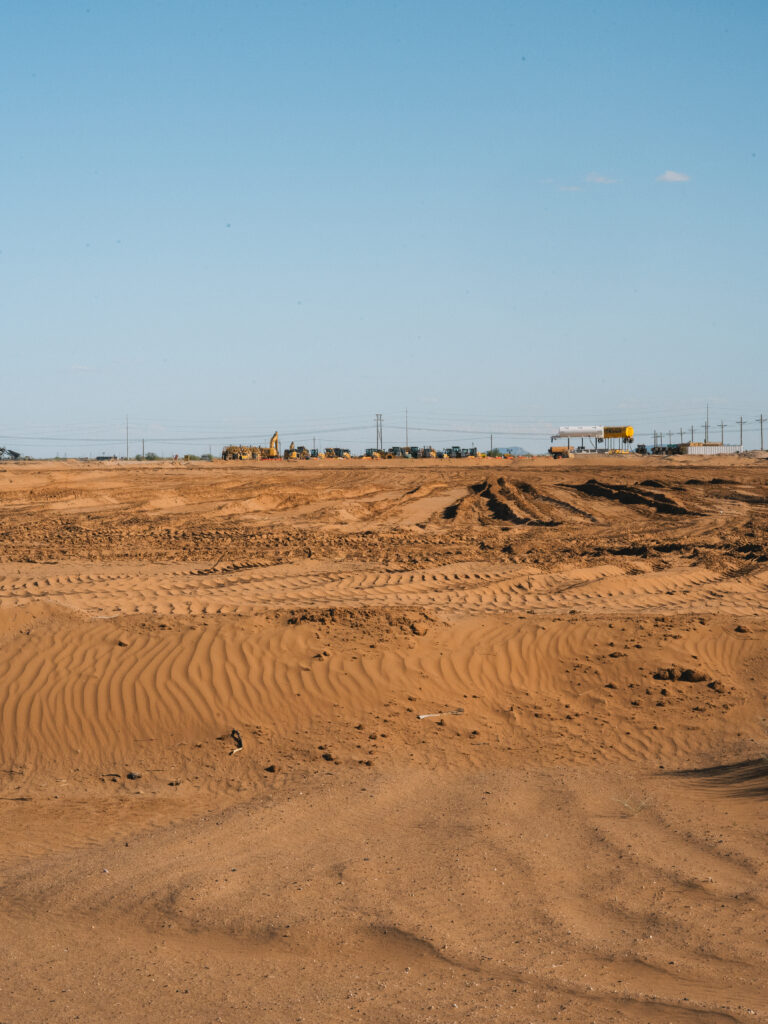
Once completed, Project Jupiter will cover approximately 5.5km2 (an area that would swallow Central Park in Manhattan). Although the companies involved remain a mystery, reportedly Oracle will operate Project Jupiter, with OpenAI as its main customer. The total cost of Project Jupiter is estimated at $165 billion over the next 30 years (approximately 7–8% of Brazil’s annual GDP). Its developers promise that “1,500 ongoing project-supported jobs” will be created, and that there will also be “$360 million in direct support for schools, infrastructure, and local services”.
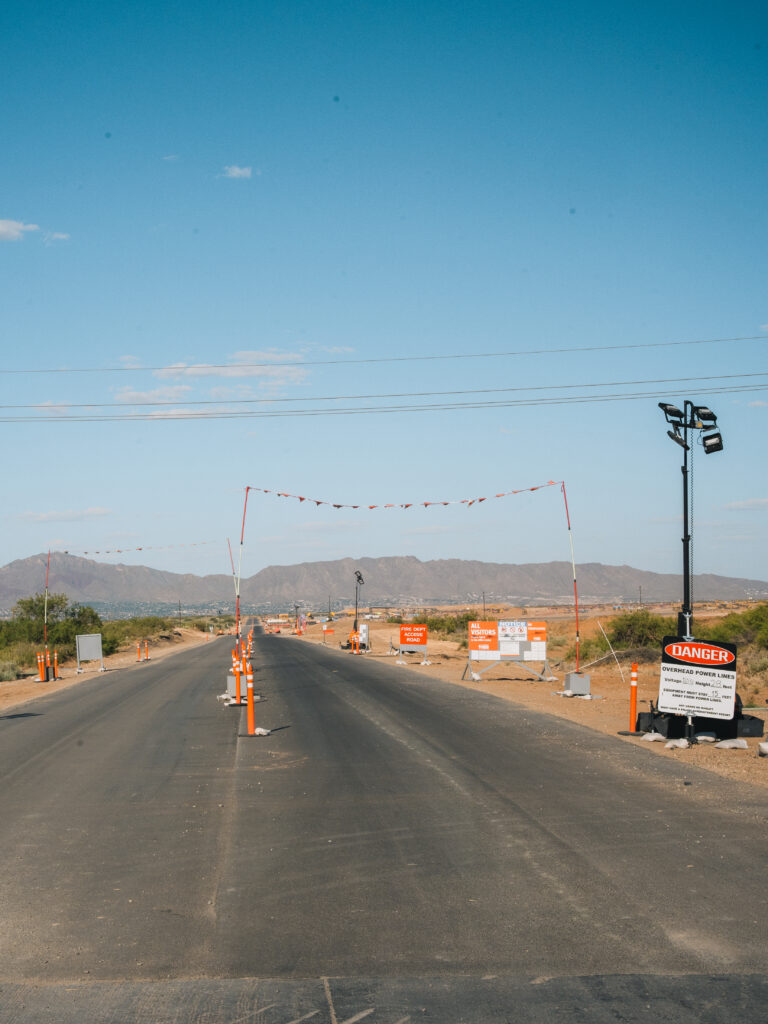
The project has received strong backing from some local and state officials, who granted its developers a package of incentives, including exemptions from property taxes and taxes on equipment used to build the facility. Project Jupiter’s planned microgrid was also exempted from New Mexico’s Energy Transition Act, which requires investor-owned utilities to transition to carbon-free electricity by 2045. This is particularly alarming considering Project Jupiter’s need for approximately 2.5 GW of energy, more than half of the entire state of New Mexico. Because the microgrid would generate power independently rather than drawing electricity from the existing grid, the project would not be subject to the law’s clean-energy requirements.
Developers initially proposed meeting the facility’s substantial power demand through a new natural gas-fired power plant, but later shifted to fuel cells, a technology that generates electricity through an electrochemical process as opposed to combustion. Crucially, it has also not been deployed anywhere close to this scale. While the shift could reduce projected annual greenhouse gas emissions from roughly 14 million t to 10 million t, the facility would remain a major source of emissions, comparable to those of an entire mid-sized US city such as Philadelphia or Buffalo.
The shift to fuel cell technology has also altered the project’s water use. Developers revised their estimates from nearly over 3.5 million liters of water per day to over 40 million liters of non-potable water circulating within a closed-loop recycling system. In principle, such systems can significantly reduce water consumption for cooling by continuously recirculating water rather than depleting water aquifers. However, closed-loop systems also have downsides. They are more expensive to build and operate, increase overall energy demand significantly, and require the use of water-treatment chemicals. The long-term environmental impacts are unknown.
While local and state officials were convinced by the arguments that the developers of Project Jupiter are making and ultimately approved it, local residents and communities remain highly skeptical. They argue that limited transparency and changing information regarding the project’s water requirements has made it impossible to assess its potential impact on the region’s scarce water resources.
The Main Concerns
During a public forum held in Las Cruces in late May 2026, concerned residents and community members were updated by a number of experts about the environmental and climate impacts of Project Jupiter. Residents also took this opportunity to exchange information and strategize.
I spoke to local residents in the long queue of people waiting, in the early summer heat, to enter the public forum. Residents’ main concerns were about the water and energy demand of Project Jupiter, alongside more fundamental objections to the rapid expansion and use of AI.
In the meeting, presentations by engineers, attorneys, and university researchers focused on the project’s environmental and climate footprint. They raised concerns about its projected greenhouse gas emissions and about how developers have cited executive orders from the Trump administration to support their case for how to allocate water resources. Severe concerns were also raised about the potential risks of deploying unproven AI-driven technologies, particularly their possible role in reinforcing racialized marginalization and inequality, including in healthcare, policing, and in military operations.
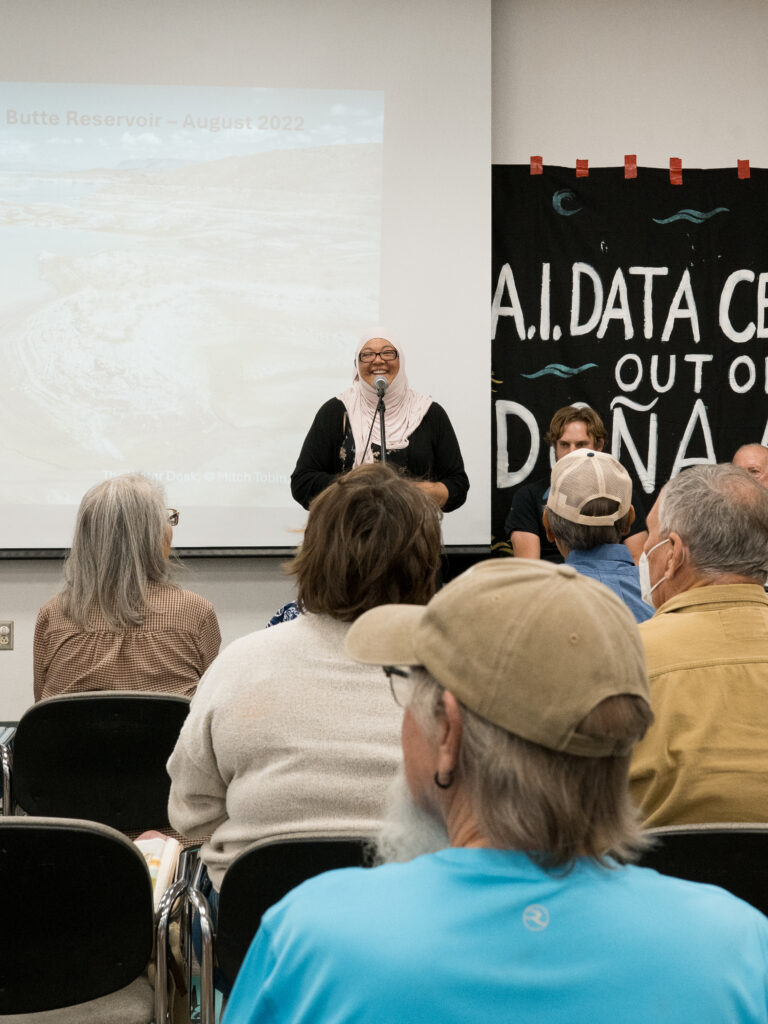
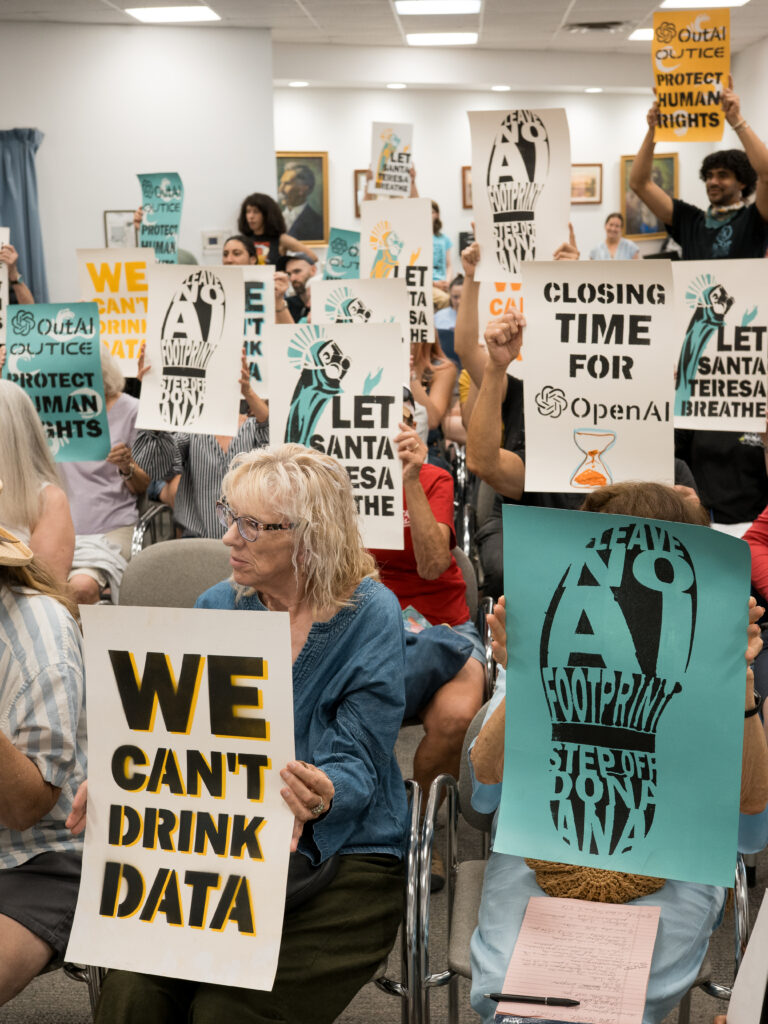
The public forum was organized by Fight Chihuahuan Desert Extraction (FCDX), a group which formed around resistance to Project Jupiter. One of its members, Daisy Maldonado, is running for county commissioner, a local governing body responsible for making key decisions, including over financial approvals, zoning, and local land-use permissions. During her successful Democratic primary campaign — in which she was endorsed by Sen. Bernie Sanders —Maldonado made her opposition to Project Jupiter the centerpiece of her platform, placing it within a broader critique of big tech and corporate influence.
Speaking with Maldonado the day after the public forum about some of the reasons why she opposed Project Jupiter, she outlined that despite developers’ promises, the number of permanent jobs created after the initial construction phase is expected to be limited, and that many of those positions would require specialized expertise not currently available in Santa Teresa. Maldonado explained that skepticism remained so high because residents had heard similar promises of economic development in the past, only to be let down time and time again. In addition to the severe environmental and climate concerns, she added that many feel the project is being steamrolled forward without any meaningful community input, describing the process as the “antithesis of democracy”. Maldonado continued “there needs to be a full halt before we can move forward”, expressing support for a proposed national moratorium on AI data centers proposed by Sen. Bernie Sanders and Rep. Alexandria Ocasio-Cortez.
Esperanza Chairez, Policy Campaign Manager at Youth United for Climate Crisis Action (YUCCA) and member of FCDX, also questioned whether the developers of Project Jupiter intentionally selected Santa Teresa because it is an unincorporated community with comparatively little political influence. Chairez suggested that, in an already arid region, commitments by the developers to make investments in local infrastructure could be an attempt to distract from residents’ concerns about the project’s potential impact on water resources. Chairez thinks that the lack of transparency around water and energy use adds to broader concerns about limited democratic participation in the rapid expansion of AI technology, issues of particular concern to young people who will be most affected in the long term. “I think there’s this consolidation between this tech industry and our state right now, on all levels,” Chairez explained, “…this deep collusion, this very troubling concentration of power, that I don’t think the majority of regular Americans want or see as beneficial to them at all”.
Resistance Is Growing Across the US
The formation of resistance groups in response to AI datacenters is by no means unique to Doña Ana County. In fact, it is happening all across the US. There are now 142 activist groups across 24 states organizing to block the construction and expansion of data centers. According to a recent poll, 71% of Americans oppose the construction of an AI data center in their area, compared to 53% who say they would oppose a nuclear power plant being built. When asked to give reasons for their opposition, the most common answer was environmental concerns.
A notable feature of the opposition movement in the US is that it generally does not align neatly with partisan lines. Residents and organizations with both conservative and progressive backgrounds are resisting AI data center development. Coalitions of indigenous movements, labor unions, and disillusioned Trump voters would have been unlikely prior to the rapid expansion of AI data centers.
Among the most prominent advocates for tighter regulation are Sanders and Ocasio-Cortez, who together recently introduced the AI Data Center Moratorium Act. If passed, the act would impose an immediate pause on all AI data center development and expansion. The act cites broader concerns about AI governance and use, but it also calls for national safeguards to prevent increasing utility costs, greater harm to communities, and environmental degradation and climate change. Numerous city councils have already passed moratoriums, while Monterey Park recently became the first city where residents themselves overwhelmingly voted for an AI data center ban.
However, there is little evidence that the opposition to data centers is shaping the policies of state governments. Maine Governor Janet Mills recently vetoed an AI data center ban for the state. In Utah, Governor Spencer Cox has been a vociferous supporter of AI data center development, arguing that the infrastructure is critical to US national security. In the Democratic-led states of California and New York, Governors Gavin Newsom and Kathy Hochul have also been prominent advocates of AI infrastructure. Newsom has tried to cement California’s leading role by vetoing a key piece of AI safety legislation, while Hochul has advanced proposals for a supercomputer cluster and sought to attract AI developers to the state. And in New Mexico, Governor Michelle Lujan Grisham supported Project Jupiter by signing the Memorandum of Understanding with the project’s developers, stating that “This groundbreaking partnership further cements our reputation as a national leader in advanced manufacturing and global trade”.
Global Implications Are a Rising Concern
Global atmospheric CO₂ levels, meanwhile, are hovering around 427 ppm. Scientists estimate that getting to roughly 350 ppm would allow for a safe and stable climate system, yet global emissions continue to move in the opposite direction. As we edge closer to many climate tipping points and the risk of irreversible changes increase, the rapid expansion of AI data centers is emerging as a stark symbol of a system that prioritizes corporate greed and technological acceleration over respecting ecological limits.
Researchers at the United Nations University estimate that by 2030, the AI data center electricity demand will be around 945 TW, which would represent almost 3% of projected global electricity use. This would add 399 million t CO2 to the atmosphere, the CO2 equivalent of approximately 6.7 billion trees grown over 10 years. The global water footprint of AI data centers is estimated at 9.3 trillion liters, equal to the domestic water needs of 1.3 billion people in Sub-Saharan Africa.
It is difficult to imagine how the energy needed for AI data centers could be sourced from renewables in the short to medium term. AI data centers need vast amounts of energy immediately, and expanding renewable energy supply often takes much longer than that. Other initiatives to reduce the environmental and climate impact include orbital data centers, though even the more bullish tech leaders admit this would still be some time away.
While more than 90% of AI data centers are currently located in the United States and China, future growth in the Global South is expected. Another important consideration is that the materials required to build this infrastructure rely on global supply chains, many of which source minerals and raw materials from countries in the Global South (including aluminum, copper, lithium, and more). This expansion risks reinforcing existing extractive patterns, while intensifying imperial aggression over resources and contributing to geopolitical tensions and conflicts.
The rapid global expansion of AI data centers has created challenges that cross over national borders, underscoring the necessity for international cooperation. Although the United Nations has established a High-Level Advisory Body on AI to inform governance decisions and promote collaboration, its mandate remains largely focused on policy and oversight issues. The environmental and climate impacts associated with the growth of AI infrastructure have yet to receive comparable attention. At the same time, escalating geopolitical tensions raise questions about the prospects for meaningful international coordination and regulation of AI in the public interest.
How to Respond to the Seemingly Unstoppable Expansion of AI
There is little doubt that the selective and critical use of AI can be extremely valuable in certain applications. However, many are asking where regulation might come from to place meaningful limits on the rampant expansion of AI. The speed and scope of AI’s rollout is daunting. Its social, environmental and economic consequences remain completely uncertain, while the power of the companies driving this transformation is largely unchecked. There is a growing sense of powerlessness in the face of Big Tech’s influence, reinforced by governments that are often more closely aligned with corporate interests than with the public they represent.
Yet this moment also lays bare some of the defining inequalities of our time. Just as AI data centers render previously invisible infrastructure visible, they also expose deeper structural realities. The limited accountability of the ultra-wealthy, the increasingly intimate relationship between economic and political power, and the ways in which emerging technologies generally reinforce authoritarian forces rather than democratic ones.
What is becoming apparent is the convergence of environmental, climate and class politics. And here lies a huge opportunity, one that has already reinvigorated civic engagement in city council meetings, budget town halls, and zoning hearings drawing large numbers of concerned residents. The conflicts surrounding AI infrastructure are not only about energy consumption or emissions, who bears the costs, and who gets to shape the future of economic developments. The potential for new forms of democratic resistance and collective action in the face of these challenges is real.
Sections of this article were lightly edited with an AI tool for clarity.
David Williams directs the Rosa Luxemburg Foundation’s Climate Justice Program in New York.