The Indigenous Fight for Climate Justice in the US Today
Jacob Johns
A conversation with climate organizer Jacob Johns
Since the inauguration of Donald Trump’s second term, the returning US President has taken a sledgehammer to climate and environmental protections. Indigenous peoples, who are on the frontlines of the climate crisis and play a vital role in safeguarding biodiversity, are among the first to be impacted by these policy rollbacks.
To learn about the consequences for indigenous communities in the United States, the Rosa Luxemburg Foundation’s David Williams spoke with Jacob Johns, who originates from the Akimel O’Otham and Hopi nations and serves as a community-supported organizer and indigenous climate activist based in Spokane, Washington. He is part of A Wisdom Keepers Delegation, a global group of Indigenous knowledge holders and Earth protectors aligned with the Backbone Campaign’s organizing network. As part of his work with A Wisdom Keepers Delegation, Jacob regularly participates in UN climate change negotiations, organizing with various other indigenous networks and advocating for the rights of indigenous peoples around the world.
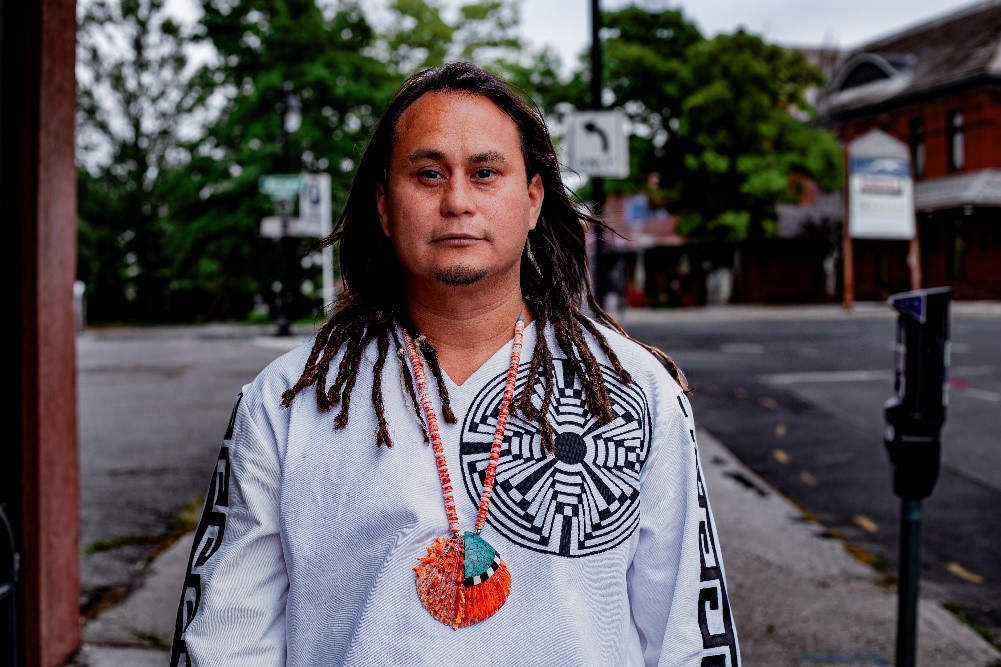
Nearly two years ago, you suffered a violent attack during a protest opposing the reinstallation of a statue honouring a Spanish conquistador in New Mexico. Your attacker had ties to the Make America Great Again (MAGA) movement. Since then, Trump has become president again. How have you experienced the last two years, and how is your recovery going?
Since the attack in New Mexico I’ve had ongoing medical issues. The shooting I suffered required emergency surgery, and I’m also having to deal with post-traumatic stress. Seeing the resurgence of MAGA and Trump brings all that back up. Seeing the support Trump receives, it makes me re-live all the trauma I experienced that day. Now, operating under autocracy and erosion of the rule of law, has made trusting people way more difficult.
At the same time, it has helped me in focusing on global solidarity. We know it is not one country that will solve this, and it’s a beautiful time to bring together the world and figure out what a just, liveable future looks like. With the US in the international wilderness, it gives us all an opportunity to demonstrate what progress really looks like.
Which would you say have the main rollbacks affecting climate and environment been under Trump? Which have affected the indigenous communities in particular?
I think the most detrimental action by the Trump administration for indigenous communities has been the deregulation of public lands for fossil fuel exploration. These are sacred lands that are being opened up for oil and gas drilling, as well as for the extraction of minerals. The Oak Flats in Arizona, Chaco Canyon in New Mexico, and Bears Ears in Utah are all examples of this, and there are many more. Deregulation of protected lands has also opened up vast areas to pipeline construction, while at the same time protestors have been designated terrorists.
Deregulation has also affected water standards, which is crucial for indigenous communities who already face poor water quality. Additionally, the administration is currently dismantling the ability for our communities and others to have access to renewable energy by taking away tax credits for wind and solar. Moving away from these prior policies means many of the achievements we have fought for so diligently over the years are being taken away from us.
The administration has also defunded the National Oceanic and Atmospheric Administration (NOAA), severely impairing our ability to track climate change and analyse its impacts. This is on top of the slashing of climate change research grants that are provided to universities across the country to protect people living in the United States. The impacts of stripping away funding from climate change research will be devastating in the end, reducing our climate preparedness. They have also dragged us out of numerous international treaties aimed at protecting climate and environment, including the Paris Agreement, which was particularly ugly.
Could you describe the response from indigenous communities to the rollbacks under Trump?
First, repression against indigenous communities is not new. Neither Biden nor Obama were in any way beneficial to indigenous communities in the US. We’re used to being fed propaganda by governments to make them seem like good guys, but we can’t forget that Standing Rock happened under the Obama administration, which they did little to prevent.
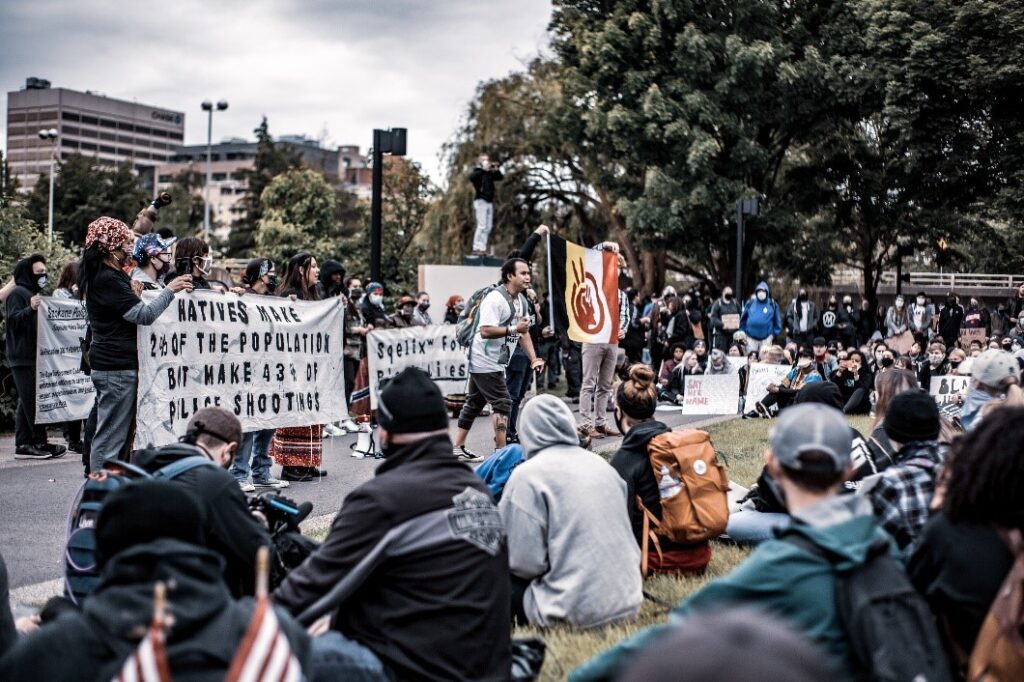
There are almost 400 groups of indigenous sovereign nations within the US. The National Congress of American Indians [NCAI, includes all federally recognized tribes in the US] and coalitions of tribal governments have put out statements about what is coming and how to prepare. We as indigenous communities are doing our utmost in coming together and trying to protect sacred sites from exploitation. Yes, the growing repression of protesters and the courts’ failure to uphold their own rulings have made things more difficult. However, speaking for my community, resilience has been forced upon us — and we were not unprepared for it.
The United States is built on settler colonialism, extractive practice, and violence. Indigenous communities have a moral obligation to protect the environment because we have a connection to the planet itself. We must speak as the voice of nature as we come together.
Are there differences in the way the US government treats indigenous vs. non-indigenous social and climate justice movements?
Yes, absolutely — there are stark differences in how the US government treats Indigenous vs. non-Indigenous movements, especially when it comes to social and climate justice. As an Indigenous person, and as someone deeply involved in these movements, I’ve witnessed first-hand the disparity.
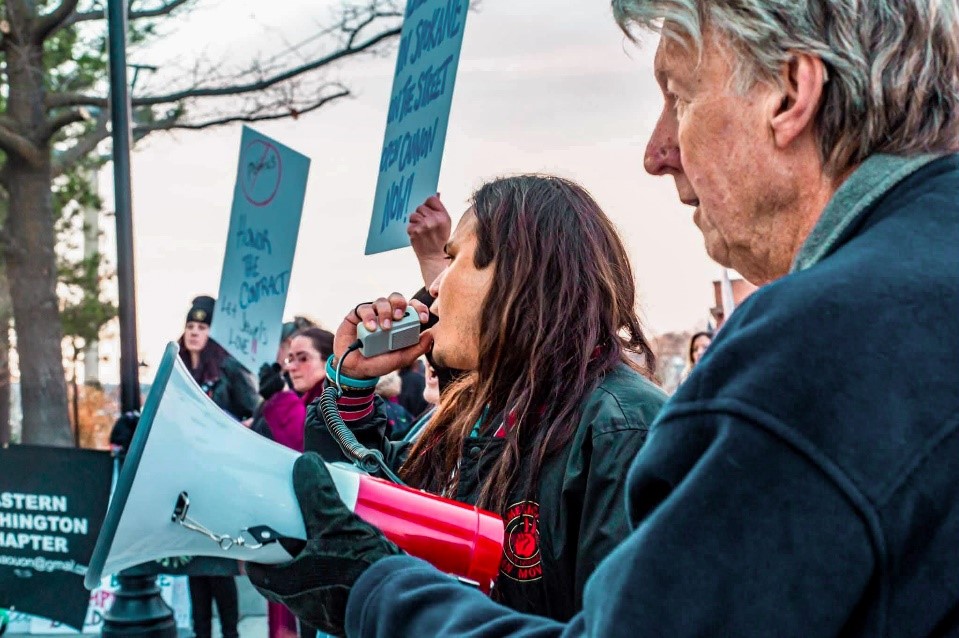
Indigenous-led efforts are often met with heightened surveillance, criminalization, and even violence. You can look at what happened at Standing Rock as one clear example — peaceful water protectors were met with militarized force, while corporations that threaten ecosystems are often protected or subsidized. Meanwhile, non-Indigenous-led movements — although they also face pushback — tend to receive more mainstream support, media validation, and institutional engagement.
What’s even more difficult is that when Indigenous people speak about land, water, and climate, we’re not just talking about policy — we’re talking about spiritual and ancestral responsibilities. Our movements are rooted in long-standing relationships with the land, and yet we’re too often treated like we’re outsiders or radicals in our own homelands.
The US government continues to ignore its treaty obligations, sidelines our leadership in global climate negotiations, and rarely provides direct access to climate finance or decision-making processes. We’re not given a seat at the table — we’re forced to carve one out while defending our communities from extraction, displacement, and systemic neglect.
You’ve spoken to increasingly draconian measures against protesters. This year, Greenpeace was fined 600 million dollars for their role in the protests against the Dakota access pipeline. What has the impact of this ruling been on indigenous communities?
The ruling was a stab to the heart of our allies. It shows the risks for organizations standing by indigenous communities on the front line. I think Greenpeace was really used as an example in that way. For us, however, we’ve constantly been under attack from our government, and we’ve never had money either, so it didn’t affect us directly as much.
You spoke about how the current political situation in the US also shows how important it is to advocate at the international level. Could you share your insights into your work in multilateral spaces, and how you engage in the key processes?
We know the US are not the leaders of the world as they like to see themselves. Even as they supposedly speak on the behalf of the American people, they don’t represent our interests. We’ve known for years that we cannot advocate toward one country, but we have to advocate to a global level. That is why the UN climate change negotiations are so important. My work is finding wisdom keepers and activists from different countries to create a policy platform with which we advocate for viable alternatives to what is taking place right now.
We spent years forging relationships with the US negotiation team, and used our policy platform to advocate to them. Now that the US has left the negotiation table, there’s no big bully for other negotiating teams to hide behind. The strategy now should be therefore to put together something legally binding, so when the US returns to a sense of normalcy, it will need to commit to these actions the rest of the world has agreed on.
The idea of us being in solidarity with each other is really important. It’s a fallacy that just because one country withdraws, the rest of the world stops. The rest of the world continues and we want to support the rest of the world even as our own domestic interests are turning to ashes.
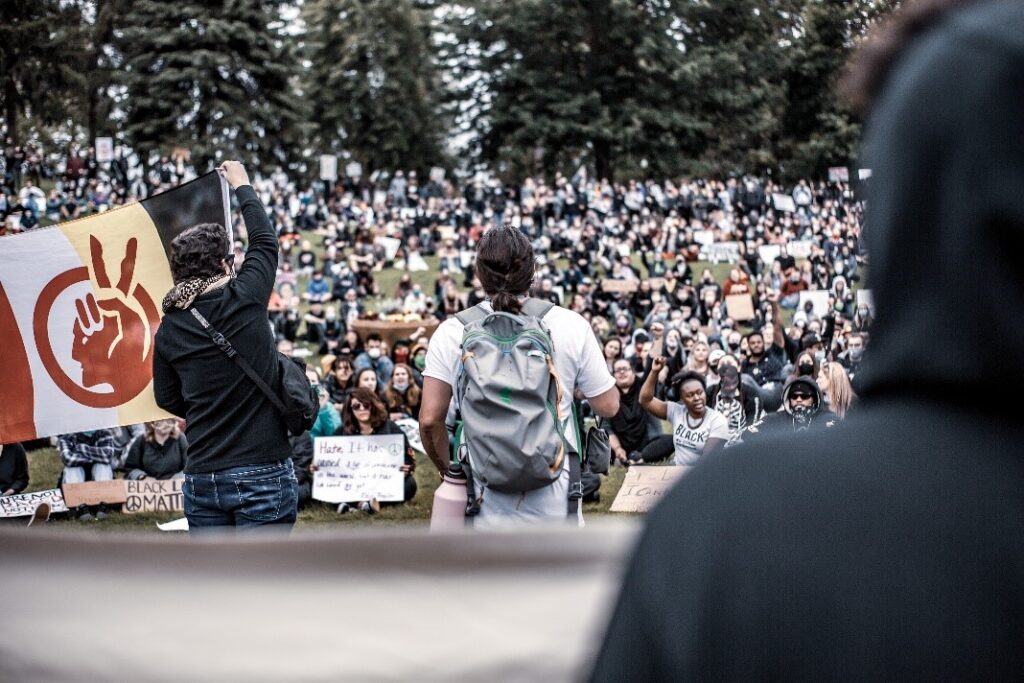
You can follow the path of A Wisdom Keepers Delegation to COP30 in “Belém” in November this year here.
Related
Concrete Destruction
Nils Urbanus , Tom Ackers, Conrad Kunze, Paulina Orozco, Matthias Schmelzer