They Hate, We Care
Laura Roth
Rethinking feminist responses to the far right in Argentina, Spain, and the United States
Anti-Feminism and Polarization
The rise of the far right is scary and outrageous. Hate and violence are becoming part of politics, not only within our countries, but also, like in the case of the US, in their external interventions (although this is — unfortunately — not a novelty of the current government).
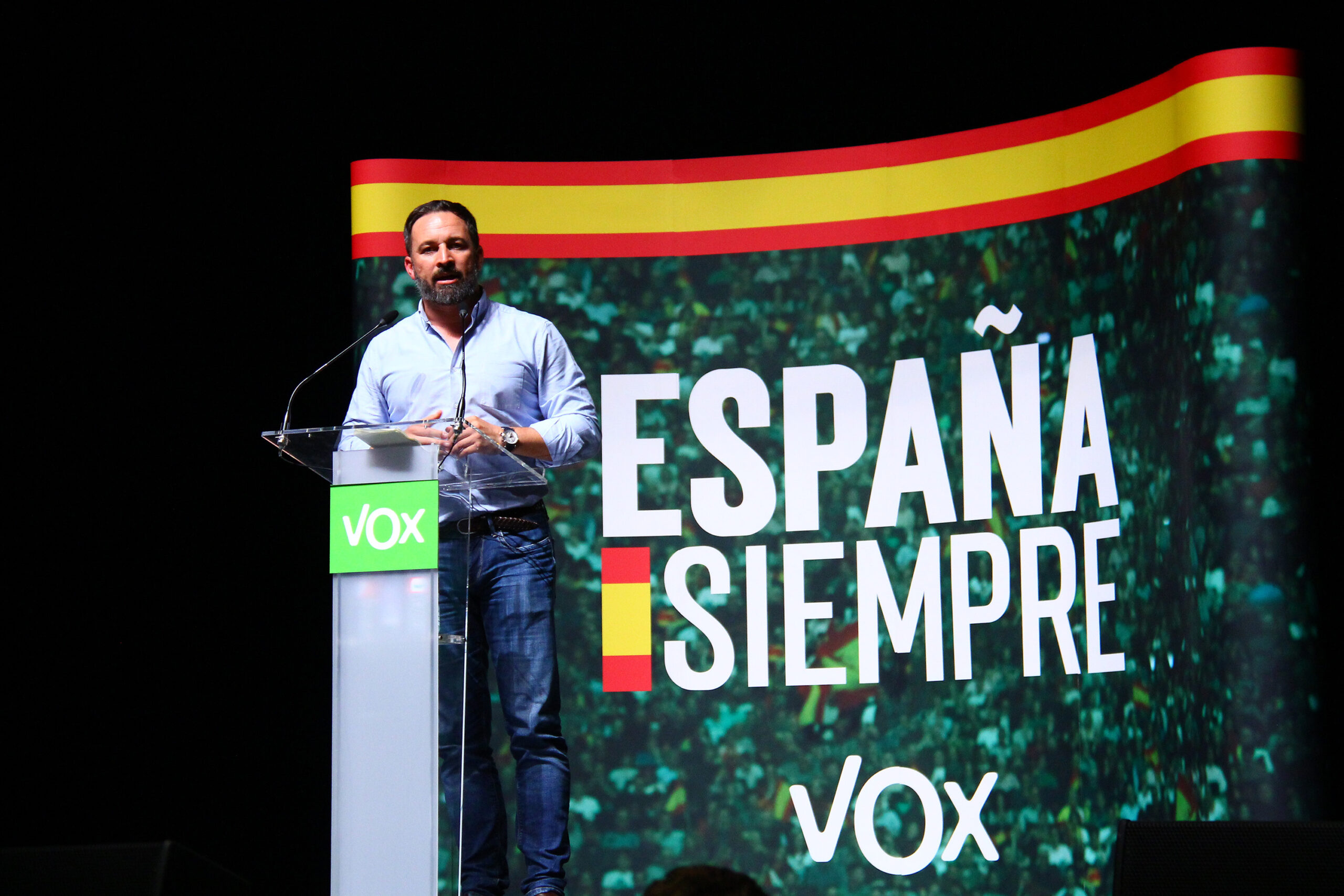
In addition to a brutal racist and xenophobic vocation, resolute anti-feminism has been one of the central elements of this new far right (Alabao, 2025). In the United States, a president who thinks that “if you’re a star you can do whatever you want… grab them by the pussy” leads a government that is fighting gender ideology (Correa, 2017) through legislation at the top level and started to energetically implement an agenda against women, girls and LGBTQIA people from the very beginning of his term. In Spain, the far-right political party Vox structures its ideology around antifeminism (Alvarez-Benavides & Jimenez Aguilar, 2021) and “uses the political capital of feminism and the affective, economic and knowledge-based capital of anti-feminism for its political, ideological and affective construction” (Pichel-Vázquez, 2021). In Argentina, president Javier Milei has been defending an aggressive misogynist, anti-feminist and anti-LGBTIQ discourse (see his full speech at Davos in 2025) and his government has been implementing an agenda that is affecting social and sexual rights, dismantling pre-existing institutions (including the closure of the Ministry of Women) and defunding gender-targeted policies (a reduction of 62% in 2024 and an additional underspending of 23% in the first half of the same year). He has also been personally engaged in numerous attacks on female journalists on social media and through the judiciary.
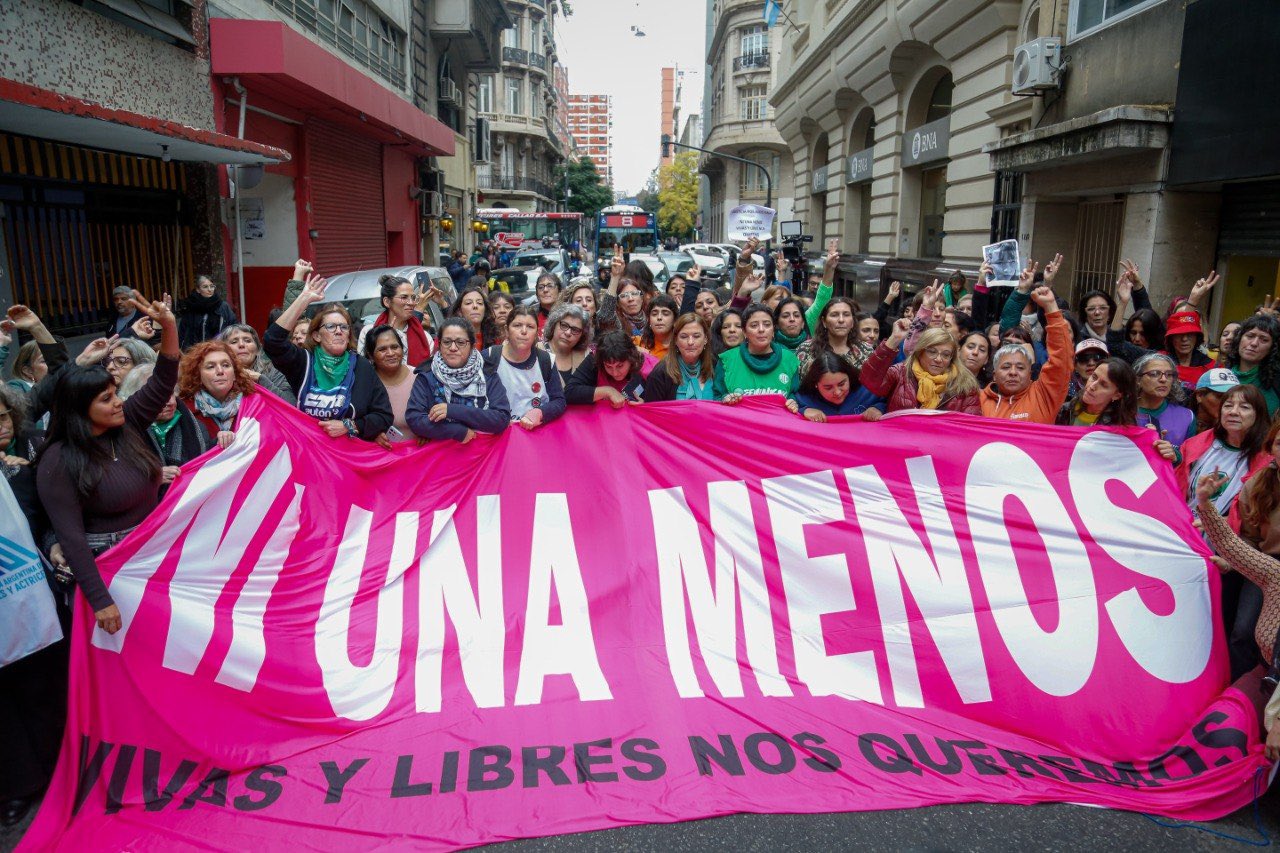
This anti-feminism has gained great traction in part thanks to the instrumentalization of the recent feminist massive mobilizations. In the three countries that I am looking at in this text — Argentina, Spain, and the United States — an unprecedented feminist tide has been rising since 2018, making feminism one of the largest mobilization issues of the decade. Some people (both in progressive and non-progressive fields) have argued that feminists went too far and that they are partially responsible for the rise of the far right, as if any social transformation in the past had been smooth and without a backlash. But the contents of the demands (not to be killed, not to be raped, etc.) and the level of outrage expressed by women are more than justified by the depth of the violence exercised against us and silently tolerated by many.
At the same time, the feminist movement is a space for internal critical reflection about past, present and future strategies. Not because we are responsible for the rise of the far right, but because we need to be smart and strategic, but also true to our values. We should ask: given the rise of the far right, how can we be more impactful in our organizing? Have we maybe been falling into some of the patriarchal practices that we criticize? How are we part of the same system that we want to dismantle? In which ways is the movement contributing to a world governed by the far right?
To critically reflect about how we mobilize is always a sensitive issue. We need to be careful not to lecture victims of any kind of oppression about what they should or should not do to express their anger or to challenge their oppressors. However, as a feminist who has been part of the recent mobilizations, who is also an activist that belongs in different ways to two of the countries analyzed (Argentina and Spain), and who is impacted by what is happening in the US, I see myself in a position to question what we could do better, hoping to deepen the debates within the movement.
I believe that we have been, to some extent, reading the situation in dualistic and oppositional terms, inheriting the framework from the patriarchal system that we want to dismantle. We have bought the polarization discourse and made it ours. We could do better by moving towards a Feminist Care Ethics (FCE) based on relational ontologies that makes us see “us” and “them” as interdependent and pushes us to look deeper into the concrete complexities in which we are embedded. In this text I will first discuss the current polarization scheme, including the growing gender gap in opinions about gender and feminism. And will then summarize FCE as an alternative to patriarchal ethics based on justice. Finally, I will discuss three examples — based on Argentina, Spain and the United States — of concrete ways in which FCE is already being implemented in activism.
Polarization Is Not What It Seems
According to the business consultant Edelman, Argentina, Spain and the United States were on the list of severely polarized countries in 2023, with Argentina leading by far (Edelman, 2023, he other three countries are Sweden, South Africa and Colombia). More recently, they describe a trend that quickly went from polarization (2023) to grievance (2024) to insularity (Edelman, 2026) and they use this data to advise companies about marketing strategies.
In the case of US politics, Ezra Klein (2020) explains that polarization between Democrats and Republicans has been growing in the last decades. The party identity of one group is reinforced by everything that the other party does: it strengthens the feelings towards one’s own group and maximizes the chance of discrimination towards the out group. In addition, media echo chambers accentuate people’s political opinions, because media weaponize differences, exaggerate and simplify reality in order to gain attention. However, more recent research by Klaus Desmet and his colleagues (2025) shows that the levels of value-based polarization has not increased in the country in that period. What has been growing is partisan polarization, which adjusted to existing societal value-based cleavages. In other words, Democrats and Republicans have been changing their discourses in a way that reinforced social polarization (supported by the media, etc) instead of softening it.
In Argentina – the most polarized country in the world, according to Edelman — the results of a recent study by Reina, Rodriguez and Barbieri (2025) “reveal a notable diversity of social beliefs, challenging the prevailing notion of an electorate neatly divided into monolithic blocs. Instead, the findings suggest a multiplicity of identities and perspectives within Argentine society, including significant variation among electoral segments, thereby questioning the assumption of binary polarization”. Along similar lines, in Spain, studies show that public opinion is much less polarized on basic issues such as public education and public health than on identity and territorial issues (i.e. whether certain nations within the Spanish state should become independent or not, whether they should be given more or less autonomy from the central government, etc) (Miller, 2020).
Political polarization is a social construct. It is fed by groups, media and leaders (also leftist ones), for different kinds of reasons. It is also a harmful and patriarchal construct. Harmful because the more we talk about polarization and structure our world in terms of us and them, the harder it gets to build bridges between groups. As mentioned in the previous US example, group identities are not only based on shared elements, but also on distrusting the other. In addition, seeing the world in polarized terms entails adopting a dualistic approach to reality that has been identified as deeply patriarchal by many feminists in the past, especially ecofeminists, as explained by Freya Mathews (Mathews, 2017). While reality is complex and messy, this dualism chooses some characteristics from reality and organizes it along two axes. In these three polarized countries, the extreme right is on the rise, benefitting from this dualism. It makes sense to question whether feminism has been contributing to that dynamic in the last few years.
Feminist Uprisings and The Gender Gap
The growing Gen-Z gender divide in politics is evident throughout the world, and it is affecting democracy in multiple ways. This gap is especially remarkable in relation to gender equality issues, such as whether young people believe that a man who stays home to look after his children is less of a man (19% of women vs. 28% of men) or whether men are currently expected to do too much to support equality (38% women of vs. 60% of men).
While in 2011 almost the same proportion of young (18-29) men and women considered themselves liberal in the United States (27% and 30%), a gap has emerged since then (in 2021 the percentages are 25 and 44, respectively). Although support for Donald Trump grew in general across groups in 2024 (compared to the 2020 election), white men were still the biggest supporters of the Republican candidate (although education level seems to be a better voting predictor than age or racialization).
In Argentina, an overwhelming majority of young men voted for Milei in 2023 and this trend is stronger in poorer non-urban areas. Some qualitative studies showed that part of the success was related to the candidate’s anti-feminist agenda. In addition, studies show that men who voted for Milei are substantially more conservative than women who did so, especially in the 18-25 age group. The campaign was successful thanks to the so-called “army of the sky”: an immense crowd of young online men who made it possible to reach people throughout the country, especially in areas with very little local physical presence.
In Spain, 52% of young men (defined as those younger than 24) believe that feminism went so far that they (men) are being discriminated against. This number contrasts with the 27% of women of the same age who believe this is the case. In January 2025, the far-right party Vox was the most preferred option for young men in the country, while it was in fourth place for men in general and sixth place for women in general.
In Argentina, data show similar trends, but in addition there’s an accusation by progressives themselves that las feministas se pasaron tres pueblos (feminists went three towns too far). They argued that Milei won because feminists pushed too hard in the last few years and that there is now a backlash. However, as suggested by Julia Mengolini (one of the journalists that has been harassed online by the president and his trolls), “it is not so much that feminism generated boys’ reaction of voting for Milei, but that feminism and a certain worldview pushed women and diversities towards not voting for Milei” (Mengolini, 2024, p. 49), and this is also true for women who do not identify as feminists. Mengolini compares this to the Brazilian case: without a strong and popular feminist movement, half of the women in Brazil voted for the far-right candidate Jair Bolsonaro. At the same time, Mengolini argues that the feminist movement should have talked to boys as well because “they missed the possibility of feeling part of something, as we felt in the last few years” (2024, p. 50). Did we also contribute to reading the world in terms of us and them instead of stressing complexity and the diversity of lived experiences, as we normally preach? Did we forget that we are interdependent in numerous ways?
Feminist Care Ethics
We see things as right or wrong depending on our personal circumstances. However, there is often a tendency to distinguish between what people think and what actually is right or wrong. We can distinguish — it is argued — between justice and personal opinion. What is just is determined from an impartial perspective, and not from the situated point of view of a participant.
A famous example of this kind of reasoning was defended by John Rawls (1971): we need to decide what is just for our social institutions behind a veil of ignorance that hides our personal circumstances. He concludes that people should have individual rights and liberties, that goods need to be more equally distributed, and that there should not be discrimination based on race, gender, sex, sexual orientation, class, origin, etc. When people (e.g. the far right) make statements against these basic claims, they are not being impartial.
The problem with this line of reasoning (or any other based on impartiality and abstraction) is that it is full of assumptions about who is the ideal subject that determines what is right and wrong. In the 1980s, some US feminists such as Carol Gilligan (1993) and Virginia Held (1993) started to question mainstream justice-centered accounts, arguing that these were not neutral ethical positions, because they were based on the experience of (certain) men who occupy a restricted public sphere1. In contrast, a FCE relies on the experience of those who are commonly responsible for care and social/political reproductive work (i.e. the paid and unpaid work that sustains life/society/political systems over time). This initial women-focused approach to justice shifted later towards intersectionality theory (Hankivsky, 2014; Raghuram, 2019; Ward, 2015). But the point is not so much who is socialized into this line of ethical reasoning; the point is that the perspective that was once considered impartial was in fact also biased, because it was based on the privilege of not having to care for others.
In Tronto and Fisher’s words, caring is an “activity that includes everything that we do to maintain, continue, and repair our ‘world’ so that we can live in it as well as possible”. But FCE is also based on another key element: relational ontology. It is not based on a view of the self as a self-sufficient individual, but as being always embedded in relationships of interdependence. Tronto and Fisher explain that “that world includes our bodies, our selves, and our environment, all of which we seek to interweave in a complex, life-sustaining web” (Fisher & Tronto, 1991, p. 40).
A lot has been written about the application of FCE to different areas, from those traditionally connected to care work such as nursing, bioethics, disability, or education (Gallagher, 2024; Haddad, 2016; Kittay, 2011; Noddings, 2012; Rabin, 2023), to politics more broadly, even at a global level (Hankivsky, 2004; Held, 2006; Sevenhuijsen, 2003; Tronto, 2013). Here I want to focus not so much on how to act under the guidance of FCE, but on the implications of the relational ontology that lies at its basis.
FCE calls us, not only to attend to people’s needs as long as we are able to, but also to change the way we perceive ourselves and others. We are immersed in concrete relationships that we are not always aware of. We depend on each other in complex and concrete ways, and this holds, not only for family, friends and immediate community members (where we could easily identify the reproductive work that someone does), but also for distant others and, very importantly, our political opponents.
Acknowledging this interdependence pushes us to recognize how vulnerable we are and to break the image of the autonomous self. It also pushes us to see our responsibility for our individual and collective actions and inactions, both intended and unintended. It also takes us from the roles of victims and perpetrators, towards more complex positionalities, based not merely on privilege and oppression, but also on the multiple ways in which we are affected by others and can affect them. I have been a migrated person who has been regularly excluded from certain spaces and discussions, but I am also capable of influencing the people around me by building different kinds of narratives around this. I am an educated person who can normally express her views and opinions in an articulated way, but I am also capable of pushing people away when I speak from a place of self-righteousness. What I can do, but also what I can be responsible for, depends, not only on myself as an autonomous person, but on the multiple relationships that bind me. As feminist collectives, we should think along these lines.
Unlike liberals (but the same applies to republicanism or consequentialism), we do not see ourselves as detached individuals. Unlike Marxists and some Feminists, we see the relationships that we are entangled in as specific and concrete, not abstract and general.
Territorial Eco-Feminisms in Argentina and the Region
“In times where the new rights and fundamentalisms in Latin America express cruelty as a political project, we find their main antagonist in feminisms and ecologism”, say Francisca Fernández Droguett and Florencia Puente in a recent publication about territorial ecofeminisms in Latin America (Fernandez Droguett & Puente, 2024). The rise of the far right, with its opposition to social rights and its anti-ecological agenda, is attacking the reproduction of life through discourse and practice, by implementing policies that are burdening care-givers (typically women) and making it difficult to sustain life on earth (p.17). Eco-territorial feminisms are a tangible example of how to articulate activism from the point of view of interdependence, and include three elements: 1) a situated and popular character, 2) an orientation towards collective practice and 3) an anticolonial perspective centered on the fight against neo-extractivism (Svampa, 2024, p. 25).
What is interesting about these ecofeminisms is that their relational ontologies (based on indigenous wisdom) are not only based on the idea that we (humans) depend on each other and we all need care to survive and flourish. They go beyond (some) Western FCE by giving centrality to a criticism of anthropocentrism as another expression of patriarchal dualism based on the distinction between what is human and superior and natural and inferior (Svampa, 2024, p. 23). They have traditionally been suspicious of liberal/urban feminisms and of feminist theory and have been deeply impregnated by the ancestral struggles of indigenous women. They believe that practice should inform and feed ecofeminist theory (Svampa, 2024, p. 27) and that inequalities are not merely intersectional, but that there is a whole system of violence that needs to be dismantled (Fernandez Droguett & Puente, 2024, p. 16). Finally, they focus on sustaining and taking care of the multiple and concrete webs of life, looking at the relationship to the earth, to rivers, trees and territories as beings. In other words, ecoterritorial feminists are not people taking care of their environment, but members of a web of life that sustains itself.
Radical Municipalism in Spain and Beyond
In 2015 an unstoppable wave of popular power seized the government in all major cities in Spain. It had been organizing in the form of broad confluences (not political coalitions) that included social movements, small pre-existing political parties and also many people who had not organized before. The case of Barcelona en Comú is the most famous, where former housing activist Ada Colau became mayor. The movement inspired and supported dozens of other similar projects in other parts of the world like Rosario (Argentina), Napoli (Italy), Zagreb (Croatia), and Belgrade (Serbia), and for some time the so-called Fearless Cities network gained considerable attention as a promising alternative to state-based representative democracy.
In practice, one could say that the radical municipalist wave is now in a backwash stage and even that the strategy is in crisis (Roth et al., 2023). Regardless of whether this is true and the implications of that possibility, it still makes sense to look at the model as a way of potentially institutionalizing FCE beyond social organizing, within public institutions.
Radical municipalism is a political strategy based on building popular power from the local level, based on proximity. It questions the model of state-centered institutions such as parliaments and political parties. The specific shape that it can take depends on the concrete context, but it is based on broad popular organizing plus the aim of becoming government and re-structuring it in a radically participatory way. In addition, it goes beyond the local level by scaling up and out through confederations or networks (Roth & Russell, 2018).
There are at least three reasons why radical municipalism is an appealing political strategy from the point of view of FCE. First of all, radical municipalism is based on a politics of proximity where power is built, not through competition and negotiation, but mainly through open cooperation. This is why confluences are created with an open structure that allows power to be generated by what people call desborde (overflow) in Spain. Politics is not articulated as us vs. them, but as a broad local us.
Second, in clear contrast to representative politics, radical municipalism is not built through mass media, big politics and big donations. It happens through complex and multiple acts of micropolitics: crowdfunding (for campaigns), crowdsourcing (for manifestos), volunteer work (for campaigning), participatory democracy (for self-government).
Finally, like feminism in general, FCE and also radical municipalism aim to enlarge the political sphere by questioning traditional divides between the public and the private. In radical municipalism, politics is not what the state does, but also what social movements and ordinary people do. At the same time, local organizing makes it easier to identify real needs instead of assuming homogeneity across populations, and it also makes it possible to politicize issues connected to care that were considered private (and therefore undervalued) before.
The most recent inspiring example of this radical municipalism is Zohran Mamdani in New York. A campaign based on an unapologetic embrace of diversity and complexity (including the fact that Mamdani stressed that he is a Muslim and a young person, instead of hiding that); a focus, not on abstract ideas, but on concrete contextual challenges like affordability, transportation and childcare; and a campaign based on overflow (100,000 volunteers knocking on 3 million doors). According to the field director of the campaign Tascha Van Auken, “the most powerful thing in field and on campaigns and in organizing is building relationships and being able to relate to people”, and this is a form of campaigning that “you can’t control”. We will see in the coming years whether this radical approach to local politics is able to continue as a relational project.
Relational Organizing in the US
A similar approach is followed by People’s Action, also in the US. They believe that “the primary building block of relational organizing is one-to-one relationships that explore self-interest and values toward the goal of surfacing shared interests and common values that can bridge across differences”. In a context of rising polarization and the growth of extremist positions, they explore ways of organizing based on “a radical commitment to building relationships rooted in shared interests and values, despite real and important differences in identity, politics, and belief systems” (McArthur, 2023, p. 77).
One of the interesting ways in which relational organizing is directly working to build bridges with far right supporters is deep canvassing, as shown by research conducted in 2020 in rural areas and small towns in the US. This technique is based on deep listening and connecting at a personal level with people who we disagree with. In practice, it includes a) non-judgmental conversations about people’s experiences, including follow-up questions, and b) Sharing narratives about personal experiences with the issue at stake, reinforcing the values relevant to the issue. The rationale behind it is the following:
Individuals often resist persuasion because yielding to it would pose a threat to their self-image. It is difficult for people to admit that they have held views that were in error and people generally dislike recognizing inconsistencies in their views or seeing themselves as susceptible to persuasion and manipulation. Deep canvass conversations are positioned to overcome these challenges because non-judgmental listening reduces perceived threat to self-image and being heard increases a feeling of respect. Deep canvassing promotes active processing and participation in a conversation which increases openness to engaging with alternative viewpoints. The practice of sharing narratives also is perceived as less manipulative and more engaging than facts and creates an emotional connection that moves beyond surface-level talking points.
That research showed that this technique was able to achieve an 8% opinion shift, and this is a remarkable result in a society so defined by polarization. Feminists could be inspired by this approach in order to build a bigger we while staying true to our aspirations.
We Are Not the Resistance
Some have been telling feminists that we went too far. If we believe them, there can be a temptation to become less explicit, less bold, less assertive in our demands. To dilute our identities, hide our diversity in order to become more appealing. We seem to be caught in the dilemma of either adding wood to the fire of polarization or losing ourselves. However, in both of these alternatives, we are buying into the patriarchal framework of a monotone reality. We either reinforce the black & white dichotomy, or we become grey. If we look closer, following the invitation of FCE, reality is multicolored.
As Michelle Alexander argued some years ago, “we are not the resistance”: the far right are the ones resisting a wave of systemic transformation that feminists have been leading from a place of joy and strength. Let us realize our interdependence, let us embrace the complexity of our concrete conditions and let us build power by building relationships that include many others, including those who (for the time being) disagree with us. As I have recently argued elsewhere, we also need to keep building collective emotional strength. And the tide will continue rising, not (only) because we are right, but because we care.
References
Alabao, N. (2025). Las guerras de género. La política sexual de las derechas radicales. Katakrak Liburuak. katakrak.net/sites/default/files/las_guerras_de_generoweb.pdf
Alvarez-Benavides, A., & Jimenez Aguilar, F. (2021). La contraprogramación cultural de Vox: Secularización, género y antifeminismo. Politica y Sociedad. nwlc.org/resource/donald-trumps-first-100-days-of-project-2025-harms-to-women-girls-and-lgbtqi-people/
Correa, S. (2017). Gender Ideology: Tracking its origins and meaning in current gender politics. LSE Blogs. blogs.lse.ac.uk/gender/2017/12/11/gender-ideology-tracking-its-origins-and-meanings-in-current-gender-politics/
Desmet, K., Ortuño-Ortín, I., & Wacziarg, R. (2025). Latent Polarization. NBER Working Papers. www.nber.org/papers/w34229
Edelman. (2023). Edelman Trust Barometer. Navigating a Polarized World. Edelman.
Edelman. (2026). 2026 Edelman Trust Barometer. Edelman. www.edelman.com/trust/2026/trust-barometer
Fernandez Droguett, F., & Puente, F. (Eds). (2024). Feminismos ecoterritoriales en América Latina. Cuidar, crear, re-existir. Fundación Rosa Luxemburgo. rosalux.org.br/wp-content/uploads/2024/05/Feminismos-Ecoterritoriales_240405_125543-1.pdf
Fisher, B., & Tronto, J. (1991). Toward a Feminist Thery of Care. In E. Abel & M. Nelson (Eds), Circles of Care: Work and Identity in Women’s Lives. State University of New York Press.
Gallagher, A. (2024). Care Ethics and Nursing Practice. In P. A. Scott & S. M. Scott (Eds), Key Concepts and Issues in Nursing Ethics. Springer.
Gillian, C. (1993). In a Different Voice. Psychological Theory and Women’s Development (reissue). Harvard University Press.
Haddad, A. (2016). Care Ethics. In H. ten Have (Ed.), Encyclopedia of Global Bioethics. Springer.
Hankivsky, O. (2004). Social Policy and the Ethics of Care. University of British Columbia Press.
Hankivsky, O. (2014). Rethinking Care Ethics: On the Promise and Potential of an Intersectional Analysis. American Political Science Review, 108(2), 252–264.
Held, V. (1993). Feminist Morality. Transforming Culture, Society, and Politics. The University of Chicago Press.
Held, V. (2006). The Ethics of Care: Personal, Political, Global. Oxford University Press.
Kittay, E. F. (2011). The Ethics of Care, Dependence and Disability. Ratio Juris, 24(1), 49–58.
Klein, E. (2020). Why we’re polarised. Avid Reader Press.
Mathews, F. (2017). The Dilemma of Dualism. In Routledge International Handbook on Gender and Environment. Routledge.
McArthur, L. (2023). To save democracy, fund organizing. Stanford Social Innovation Review. shatil.org.il/wp-content/uploads/2023/08/Viewpoint_To_Save_Democracy__Fund_Organizing.pdf
Mengolini, J. (2024). Las caras del monstruo. FutuRock.
Miller, L. (2020). Polarización en España: Más divididos por ideología e identidad que por políticas públicas (No. 18; EsadeEcPol Insight). Esade. www.esade.edu/ecpol/es/publicaciones/esdeecpol-insight-polarizacion/
Noddings, N. (2012). The Caring Relation in Teaching. Oxford Review of Education, 38(6), 771–781.
Pichel-Vázquez, A. (2021). Ocho años de Vox: Feminismos, valentías y redes antifeministas en al consolidación de la ultraderecha española. Artes y Humanidades. Blog de Los Estudios de Artes y Humanidades UOC. blogs.uoc.edu/humanitats/es/ocho-anos-de-vox-feminismos-valentias-y-redes-antifeministas-en-la-consolidacion-de-la-ultraderecha-espanola/
Rabin, C. (2023). Practicing Care Ethics in the Current Context. In D. Yacek, M. Jonas, & K. Gary (Eds), Moral Education in the 21st Century. Cambridge University Press.
Raghuram, P. (2019). Race and Feminist Care Ethics: Intersectionality as Method. Gender, Place & Culture, 26(1), 1–25.
Rawls, J. (1971). A Theory of Justice. Harvard University Press.
Reina, A., Barbieri, D., & Rodríguez, C. (2025). ¿Polarización o pluralidad? Un análisis de las creencias sociales en Argentina 2023-2024. Revista Más Poder Local, 59, 50–74.
Roth, L., & Russell, B. (2018). Translocal Solidarity and the New Municipalism. Roar Magazine, (8).
Roth, L., Russell, B., & Thompson, M. (2023). Politicising proximity: Radical municipalism as a strategy in crisis. Urban Studies. doi.org/10.1177/00420980231173825
Sevenhuijsen, S. (2003). Citizenship and the Ethics of Care. Feminist Considerations on Justice, Morality and Politics. Routledge.
Svampa, M. (2024). Perspectivas teóricas y prácticas de los ecofeminismos latinoamericanos. In F. Fernandez Droguett & F. Puente (Eds), Feminismos ecoterritoriales en América Latina. Cuidar, crear, re-existir. Fundación Rosa Luxemburgo. rosalux.org.br/wp-content/uploads/2024/05/Feminismos-Ecoterritoriales_240405_125543-1.pdf
Tronto, J. (2013). Caring Democracy. Markets, Equality and Justice. NYU Press.
Ward, N. (2015). Care Ethics, Intersectionality and Poststructuralism. In M. Barnes, T. Brannelly, L. Ward, & N. Ward (Eds), Ethics of Care: Critical Advances in International Perspective. Policy Press.
1 Something similar happens with consequentialist and republican political theories that also base their conclusions on impartiality, individuality, rationality, etc. As for Marxist or Anarchist views, they are also based on some of these assumptions, but the explanation would require a space that we do not have in this text.
Laura Roth is a feminist researcher and activist based in Argentina. She co-founded the international Fearless Cities network, the Feminisation of Politics network, the Minim municipalist observatory, and participatory fund FundAction, where she is currently a Supervisory Board member. For over a decade, she has traveled the world investigating, teaching, and advocating for radical municipalism and feminist ways of doing politics. She has published many academic and non-academic texts, including the ‘Feminise Politics Now!’ handbook with the Rosa Luxemburg Stiftung, which was translated into several languages.
Top photo: Lucía Cámpora