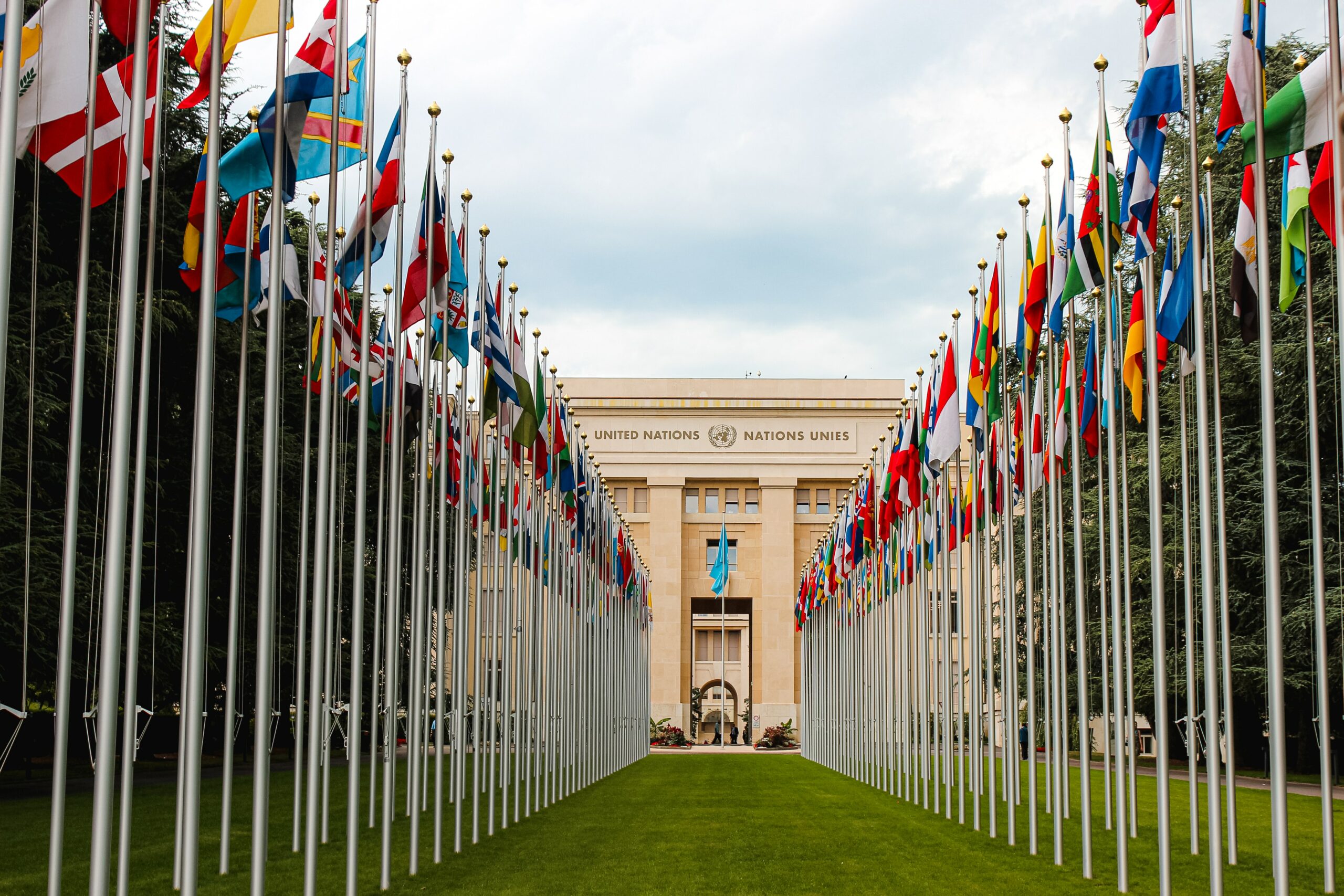
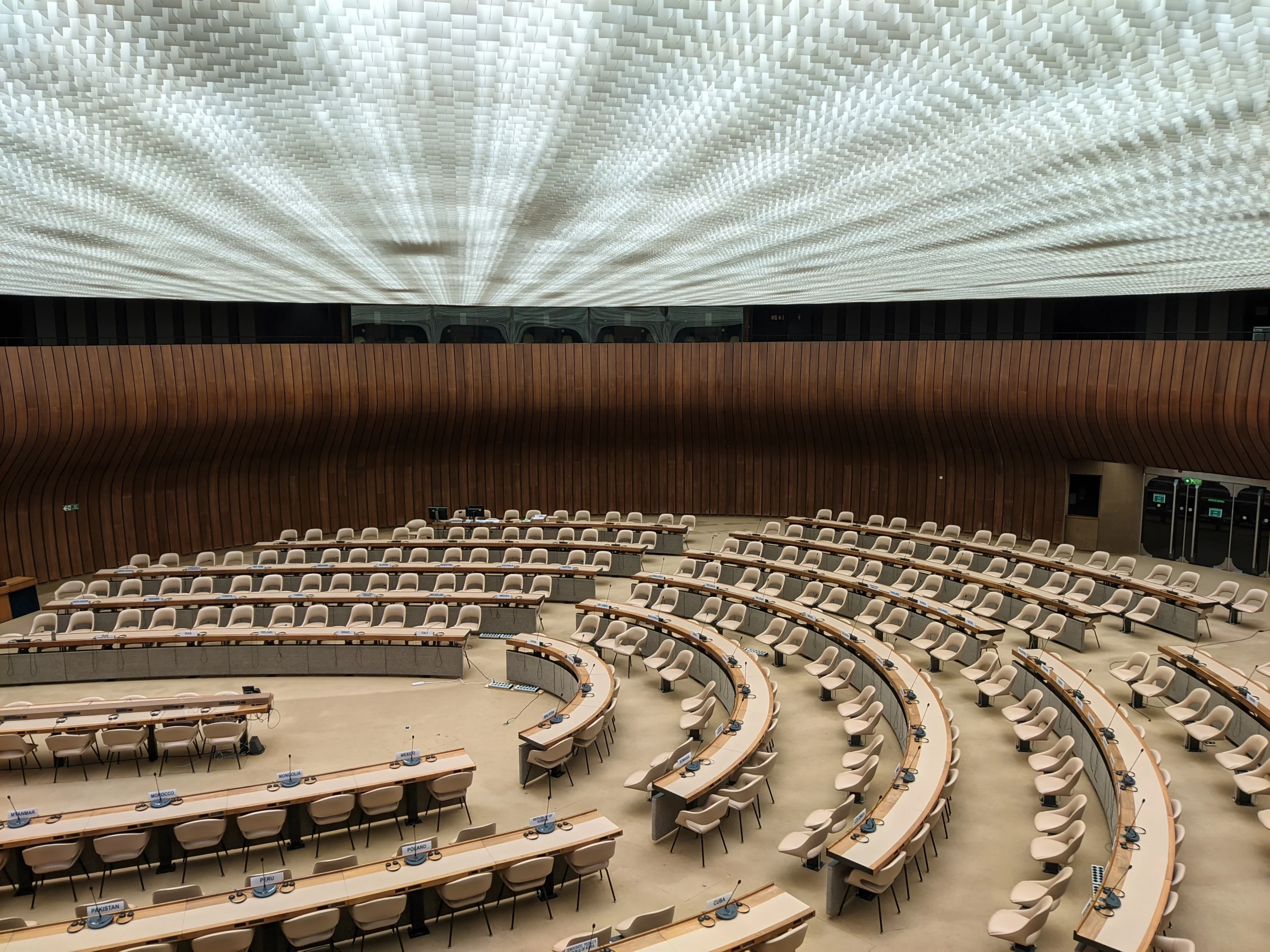
Reviving the UN Charter After 80 Years
Saul Kenny
After 80 years, the promise to renew the UN Charter remains unfulfilled. Now is the time to deliver on it.
Article 109, a new Coalition launched at the Rosa Luxemburg Foundation this week, is mobilising for a historic overhaul of the UN’s founding document.
Multilateralism is in a funk.
International cooperation is in freefall; countries are failing to work together on key issues as we slide into an era of contestation and confrontation.
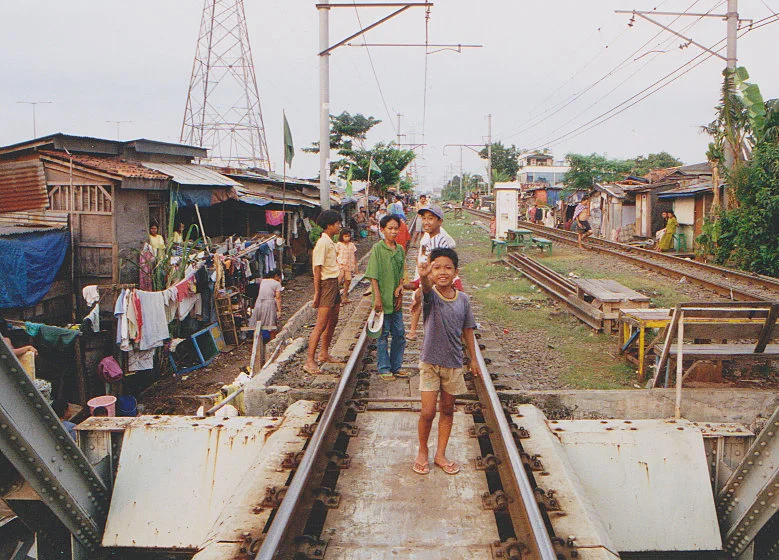
The UN is at the centre of multilateralism’s maelstrom: the invasion of Ukraine, genocide in Gaza, and devastation in Sudan are symptoms of its failed international peace and security architecture. The climate crisis continues to unfold around us, emerging technologies disrupt our societies unchecked, and global economic inequalities widen – all without an adequate international response.
That is perhaps why, in the place of celebrations as the UN marks its eightieth decade, the new President of the UN General Assembly urged Member States to pursue reform.
But the UN is handicapped by design. Failing to address its fundamental flaws will render reform efforts futile. One pathway to tackle the international system’s foundations may be hiding in plain sight: an unused review mechanism found within the UN Charter.
The old world is dying, and the new one is struggling to be born
The UN Charter is the foundational document governing international relations. It outlines the principles that govern how states interact, including how to maintain peace, avoid war, and promote harmonious co-existence.
The signing of the UN Charter in 1945 was a historic step for humanity; uniting nations in an attempt to save future generations from the “scourge of war”. When the Charter was signed, the Second World War was ongoing, the nuclear bomb had not yet been dropped, and the Universal Declaration of Human Rights was still to be drafted.
Only fifty countries were present at the Charter’s signing following the San Francisco Conference. In 1945, power was still “in the hands of colonisers” – with the veto bestowed upon the five major powers at the time. Today, the UN has 193 Member States, many of whom had no say in determining the rules of the game.
Recognising that the world would change over time, and as a concession to the many countries who were opposed to the veto power of the five permanent members of the UN Security Council, the drafters of the UN Charter included mechanisms to review it.
This includes Article 109 of the UN Charter, which allows for a General Conference to review the Charter with the support of two-thirds of the General Assembly and any nine members of the Security Council. Each Member State has one vote at the review conference.
The “San Francisco promise” was that said conference would be held within ten years of the UN Charter being signed, to reflect on what was then a new international organisation and improve it if needed. This promise remains unfulfilled to this day.
And if the UN Charter’s drafters believed that it would need to be updated ten years after it was signed, surely it requires an upgrade after eight decades?
This is what a new effort – Article 109 – is advocating for. With a multilateral system built in a bygone era collapsing around us, and taking its namesake from this pathway to reform, this new international coalition is mobilising the 193 UN Member States to renew the UN Charter while building a network of civil society organisations to support that endeavour.
No time for monsters
There is growing momentum for this pathway.
At last year’s UN General Assembly, Brazilian President Lula da Silva called for a “comprehensive review” of the UN Charter and later in 2024, India and South Africa joined Brazil in this call. Kazakhstani President Tokayev is the latest leader to call for Charter review, doing so at this year’s General Assembly.
At Article 109’s official launch in New York, former Heads of State and government Helen Clark, Alexander De Croo, and Mary Robinson also lent their support to the call for Charter renewal.
From Barbadian Prime Minister Mottley to Ukrainian President Zelenskyy – these specific calls for comprehensive review of the UN Charter come amidst global recognition that the UN needs an upgrade.
The question of reforming the UN is therefore not a question of if, but when and how.
There are legitimate concerns on holding a review conference. Would doing so, amidst geopolitical polarisation, result in a weaker Charter? But “this is not the right time” has been used as an excuse since 1955. And the inclusive nature of the conference can counter backsliding: two-thirds of the UN Members, plus the five permanent members of the Security Council, must ratify the updated Charter for it to take effect. Without this support, the current Charter remains.
We need to be frank: even if the process did carry risk, the present path carries greater risk. We can either continue down an unchartered road to global conflict and catastrophe – or revisit the ways in which we cooperate globally to reaffirm basic principles, while agreeing to a new, 21st century system of governance.
The value in holding this conference should not be taken for granted either: it is an opportunity for countries and civil society to come together to discuss the future of multilateralism and the architecture we need to effectively and equitably govern peace and security, the climate crisis and artificial intelligence , among other topics, in a manner that is controlled, transparent, and inclusive.
Antonio Gramsci’s oft-quoted phrase captures the zeitgeist: “The old world is dying, and the new one is struggling to be born; now is the time of monsters.” Amidst the monsters of our geopolitical era, we must not fear coming together to agree the underpinnings of a new international system.
Article 109 of the UN Charter provides a pathway to do so.
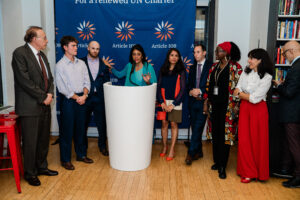
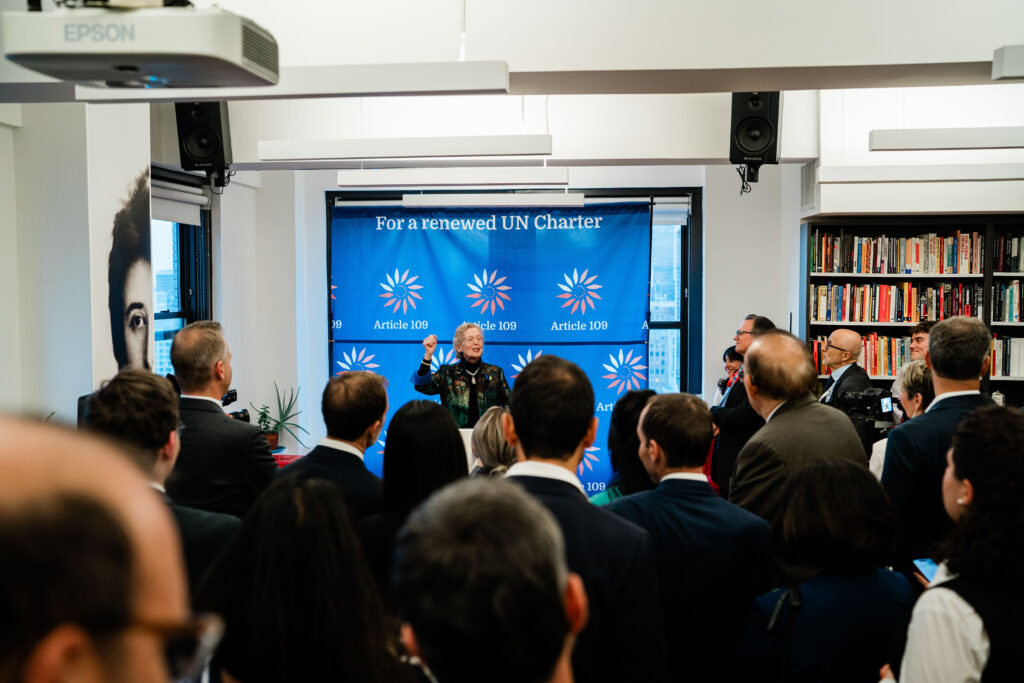
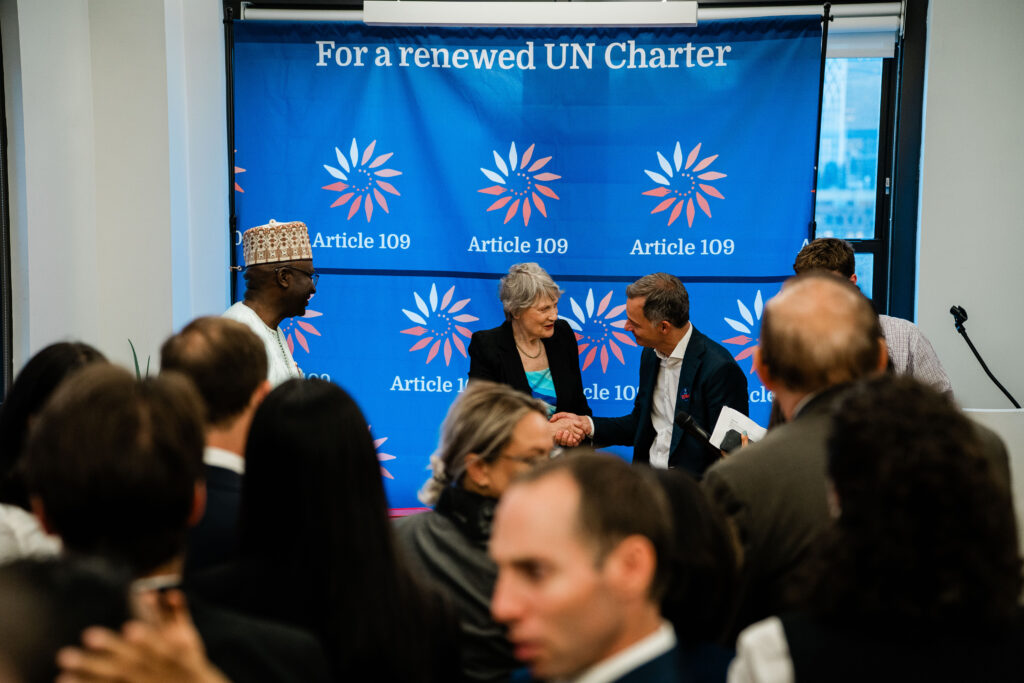
UN officials, ambassadors, and civil society leaders joined Article 109’s launch reception in New York to discuss pathways for renewing multilateralism. (September 22, 2025)
_______
Article 109 is grateful to the Rosa Luxemburg Foundation for hosting its launch reception in New York on Monday 22 September. The private reception “For Nothing is Fixed: Explore a Pathway to Reimagine Multilateralism” brought together UN officials, ambassadors, campaigners, journalists, and former world leaders to show support for this new effort mobilising to renew the UN Charter.
Saul Kenny is Article 109’s communication manager.