The Financing for Development Forum 2026: Financing Maldevelopment in a Dystopian World
Tetet Nera-LauronToday’s headlines are grim: wars and conflicts, unilateralism, extreme nationalism. These issues underpin unparalleled inequality, ecological crisis, and the climate breakdown, shrinking fiscal and political space. The world is also at a point where the ideals of international cooperation have been blatantly replaced by the financial control of a few powerful countries and entities through the power of markets, debt, conditionalities, and other policy choices that have undercut countries’ sovereignty.
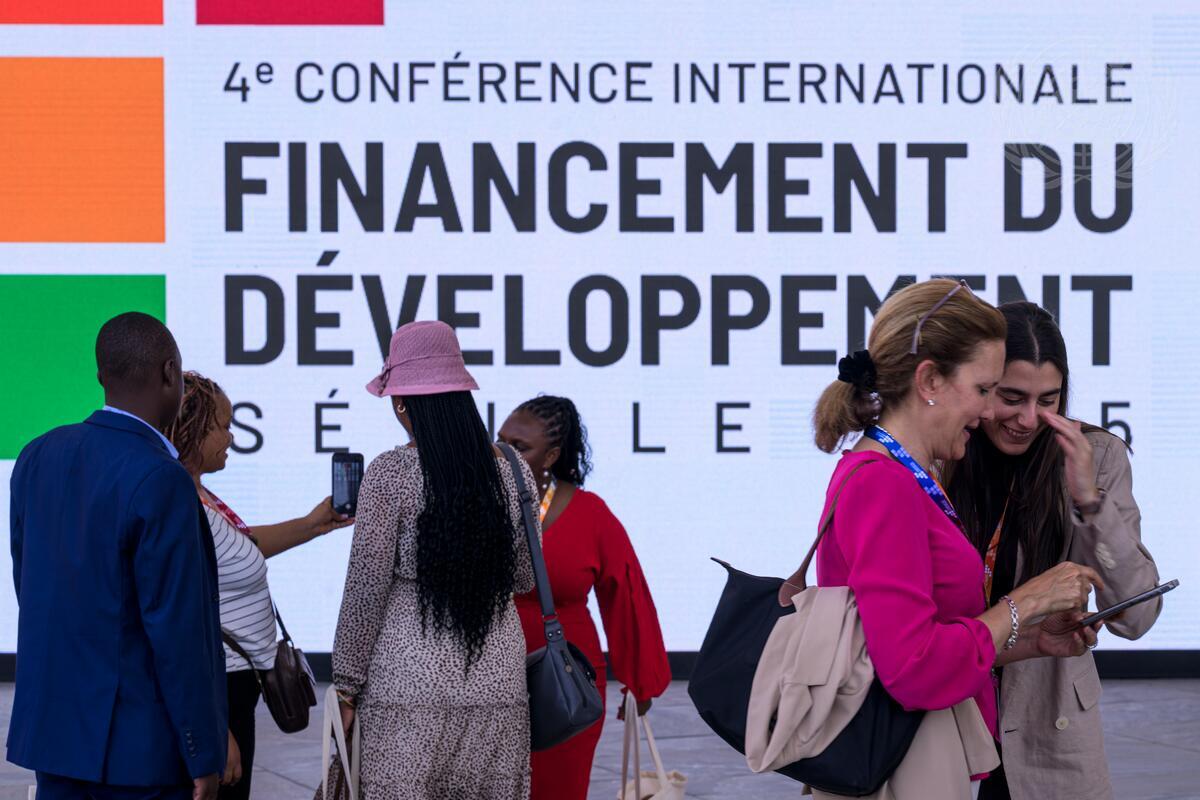
This was the backdrop for this year’s Financing for Development Forum (FfD), which took place on April 20-24, 2026 at the UN Headquarters in New York. Almost a year after the adoption of the Compromiso de Sevilla (Seville Commitment), the main outcome of the Fourth International Conference on Financing for Development (FfD4), this was supposedly a moment to take stock of the progress and challenges of transforming the international financial architecture. This year’s Forum was meant to reaffirm commitments made, avoid a push back on what have been agreed on, and ensure that the ground is set for its implementation.
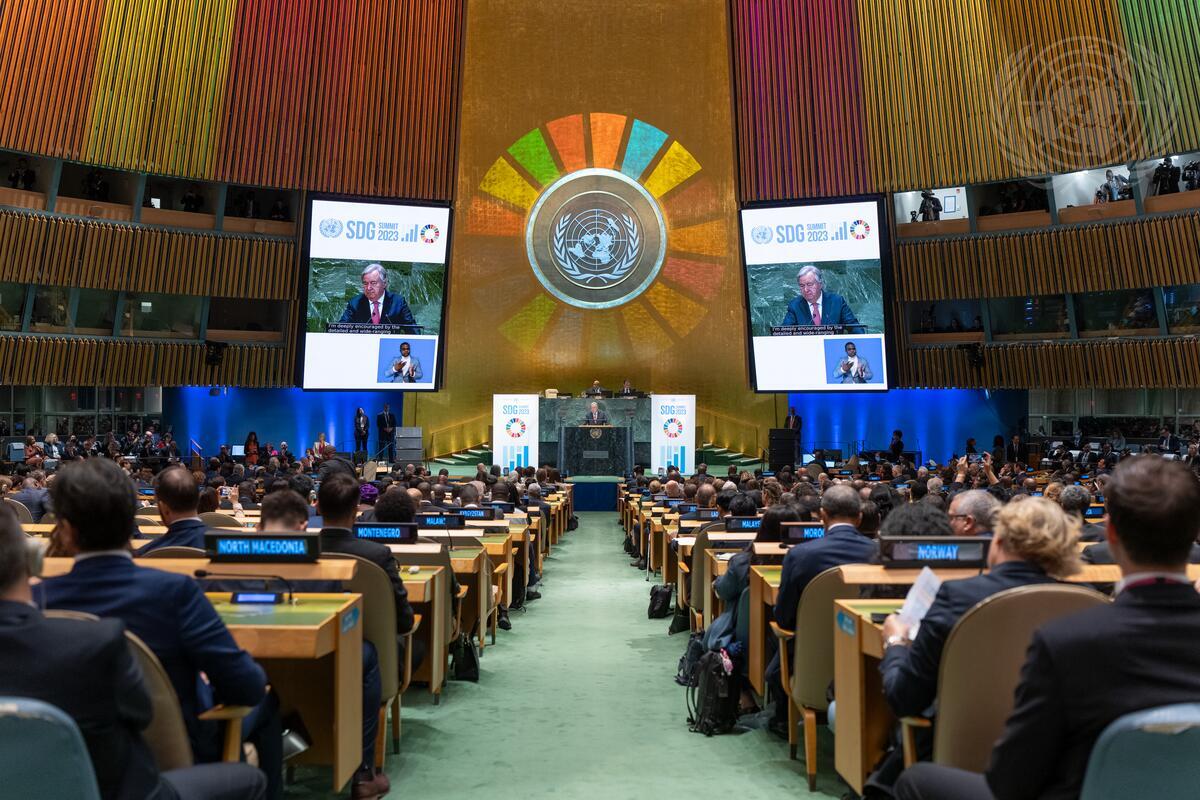
The mood in the plenary halls was somber. Member States and other global institutions mostly echoed UN Secretary General Antonio Guterres’ warning of a new global shock with the war in the Middle East, and how its economic fallout impacts heavily on an unequal world. Guterres lashed out at the drastic decline in foreign aid while global military spending skyrocketed, and said that “governments are spending more on the instruments of death than the foundations of development and peace.” With only four years to go until the deadline for the 2030 Agenda for Sustainable Development arrives, the beleaguered Sustainable Development Goals (SDGs) face more than a USD 4 trillion a year financing gap.
Member States restated the importance of keeping the spirit of the Compromiso de Sevilla alive. But it was very obvious that the 23% cut in Official Development Assistance that major donor countries have undertaken has had a chilling effect. Critical voices from developing countries were markedly muted during the deliberations. Cuba, which used to consistently speak up against unilateral coercive measures, was also reserved.
This year’s Forum focused on four areas: private finance, systemic issues, trade, and data, monitoring and follow-up to allow for a comprehensive discussion in each. Topics such as aid, debt and tax reforms that were critical and urgent for developing countries to weather the “perfect storm” from the effects of the polycrisis will be tabled next year.
Addressing the debt debacle
Global debt has reached USD 353 trillion as of end-March 2026, which undoubtedly ranks high in developing countries’ lists of concerns. Interest payments in 2024 alone reached USD 921 billion, squeezing public finances dry and severely constricting Global South countries’ capacity to spend on public services and climate action.
Throughout the FfD week, and in the wake of developing countries’ repeated calls for a greater voice in the decision-making of international financial institutions, there was notable reference to the Borrowers’ Platform as a positive direct outcome of the Sevilla conference. Launched during the IMF-WB Spring Meetings in Washington D.C. a week before the FfD Forum, the Borrowers’ Platform aims to “improve coordination and peer learning” among borrower countries. It remains to be seen if this platform can provide the space for debtor countries to collectively increase their influence in shaping global debt policies. What is clear though, is that this is not a formal mechanism to resolve many developing countries’ debt problem, which is what is most needed at the moment.
There was also mention of the Debt Pause Clause Alliance, launched in July 2025 as part of the Sevilla Platform for Action that allowed developing countries a temporary respite in debt payments during catastrophes like pandemics, natural disasters, or food crises. This brief pause in paying debts would mean the poorest countries need not worry right away about having to make a difficult choice between paying off their loans by dipping into their national budgets or focus on providing much-needed social protection to their citizens hit hard by disastrous events. But, they are still expected to pay off their loans in the long-term.
It is quite ironic that while there is almost universal recognition of the gravity of the global debt problem, there remains a great divide in the solutions proposed by developing and developed countries, with the latter largely supporting recommendations from the IMF-WB. As an example, developing countries call for a massive expansion of debt relief, including debt cancellation to reduce payments and free up resources for social services and climate action. Developed countries and international financial institutions meanwhile propose a 3-pillar approach for developing countries that includes structural reforms, selective debt management (including different variations of debt swaps) and more debts to countries already drowning in debt.
From international cooperation to militarization: a case of shifting priorities
The latest OECD data shows that in 2025, only USD 14.3 billion or 0.26% of donor countries’ total incomes have been committed for aid. Again, despite the fact that the UN General Assembly agreed in 1970, and upheld in many global summits after, that rich countries are to set aside 0.7% of their incomes for aid. Out of 38 donor countries, only 4 (Norway, Luxembourg, Sweden and Denmark) have made good on their aid commitments.
That countries’ aid spending took a drastic nosedive reflects a shift in priorities of developed countries, away from poverty reduction and the fight against inequalities in the Global South and toward influencing geopolitics. Increasingly aid is being used to serve the commercial, political and security interests of rich countries. Global military expenditure reached a record USD2.7 trillion in 2024, marking a 9.4% increase from the previous year.
There is also a very strong push to use ODA (which is public money) to guarantee private investments, highlighting private capital’s supposed “developmental role.” This changes the narrative of aid from an obligation to an investment program that ultimately generates more profits and opportunities for private corporations. Aid is rooted in the principle of paying up for centuries of historic injustice, and still remains a necessary and relevant form of financing for the global South especially in the midst of today’s global crises.
A paltry outcome
FfD Forums conclude with a declaration agreed on by the Member States, usually negotiated beforehand. This was not the case this time. There were heated debates when the draft outcome document was presented at the closing session, which showed many Member States’ dissatisfaction over the apparent apolitical handling of the FfD agenda. Many were “equally unhappy” with the outcome document, which merely restated the commitments made almost a year ago; a very low bar considering that implementation and ambition are urgently needed. Observers were also dismayed with preoccupation on the technical aspects of financing when the world is in a very different situation from a year ago when the Compromiso de Sevilla was agreed on.
In the context of deep, interlinked crises and escalating global conflicts, the final outcome document fell woefully short for the urgency and ambition needed to transform systemic failures of the international financial architecture. Civil society observers astutely pointed out in many of their interventions: this is not a broken system, but one designed in a way that extracts wealth and resources from global South to North.
If the promise of Sevilla is to be kept alive, there must be a return to the original intent of Financing for Development: to address systemic inequities, rebuild trust in multilateralism, and to strengthen the foundations of international cooperation. Anything less could lead to the eventual irrelevance of this platform. Correcting this will require not only policy space, but the political will to overhaul this dystopian reality. And that, as always, depends on sustained pressure from civil society and social movements.
Tetet Lauron works as a consultant to the Rosa Luxemburg Foundation New York Office. She is based in the Philippines.
Top photo: UN Photo/Manuel Elías
Related

Who Pays for Development?
Global Initiative for Economic, Social and Cultural Rights (GI-ESCR)