Left Wins Amid Democratic Landslide in US Midterms
Stefan LiebichTrump suffers major electoral rebuke as socialists and progressives make historic gains
Democrats have won this year’s midterm elections in a landslide. President Trump’s approval rating had fallen to 38 percent on Election Day – a record low for a president at the midpoint of his term. Yet Trump had insisted that voters treat the election as if he himself were on the ballot. The setback came as little surprise: the cost of living and the state of American democracy were the issues voters cared about most.
It is rare for both chambers of Congress to flip to the opposition in a single night. In the House of Representatives, as widely predicted, Democrats will control the majority of seats, the speakership and committee chairmanships.
The race for control of the Senate, however, had been considered too close to call. Yet by Wednesday morning, Democrats appear to have won the upper chamber as well. They now hold at least 54 (counting two Democratic-aligned independents) of the chamber’s 100 seats – a figure that could still rise, with several states where Democratic candidates remain competitive, including Alaska, still counting votes.
Trump’s Coalition Splinters
Particularly striking were the victories in South Carolina, where Democrats won a Senate seat for the first time since 1998, and Texas, where James Talarico became the first Democrat elected to the Senate since 1988. Rural Kansas elected a Democratic senator for the first time since 1932. Democrats also flipped a seat in North Carolina.
Trump had carried all of these states two years ago, in some cases by double-digit margins. In Georgia, Keisha Lance Bottoms was elected the first female Black governor in U.S. history. In his victory speech, Jon Ossoff, the re-elected Democratic senator from Georgia, described a country where the rich feast while overlooked families work harder than ever. But, he said, ”the first light of dawn is on the horizon.”
Trump lost because he failed to hold together key parts of his coalition. Latinos, independents and traditional Republicans outside the MAGA movement – groups that had still backed him in the last election – turned decisively against him. The high cost of living, Trump’s war with Iran, the racist and violent operations of ICE, and corruption allegations all alienated voters.
His decision to elevate hard-line candidates over more moderate figures has also backfired. „We want to return to a normal country where we can talk to one another again,” conservative commentator David Brooks said as the results came in on election night.
Democratic Socialists Gains Ground
It is worth noting, too, that Democratic Party has changed. Socialists have not been this strong in the United States for a century. In Washington, D.C., Janeese Lewis George, a candidate backed by the Democratic Socialists of America, is set to become mayor. In Los Angeles, the country’s second-largest city, Nithya Raman could follow, though counting there may take several more days.
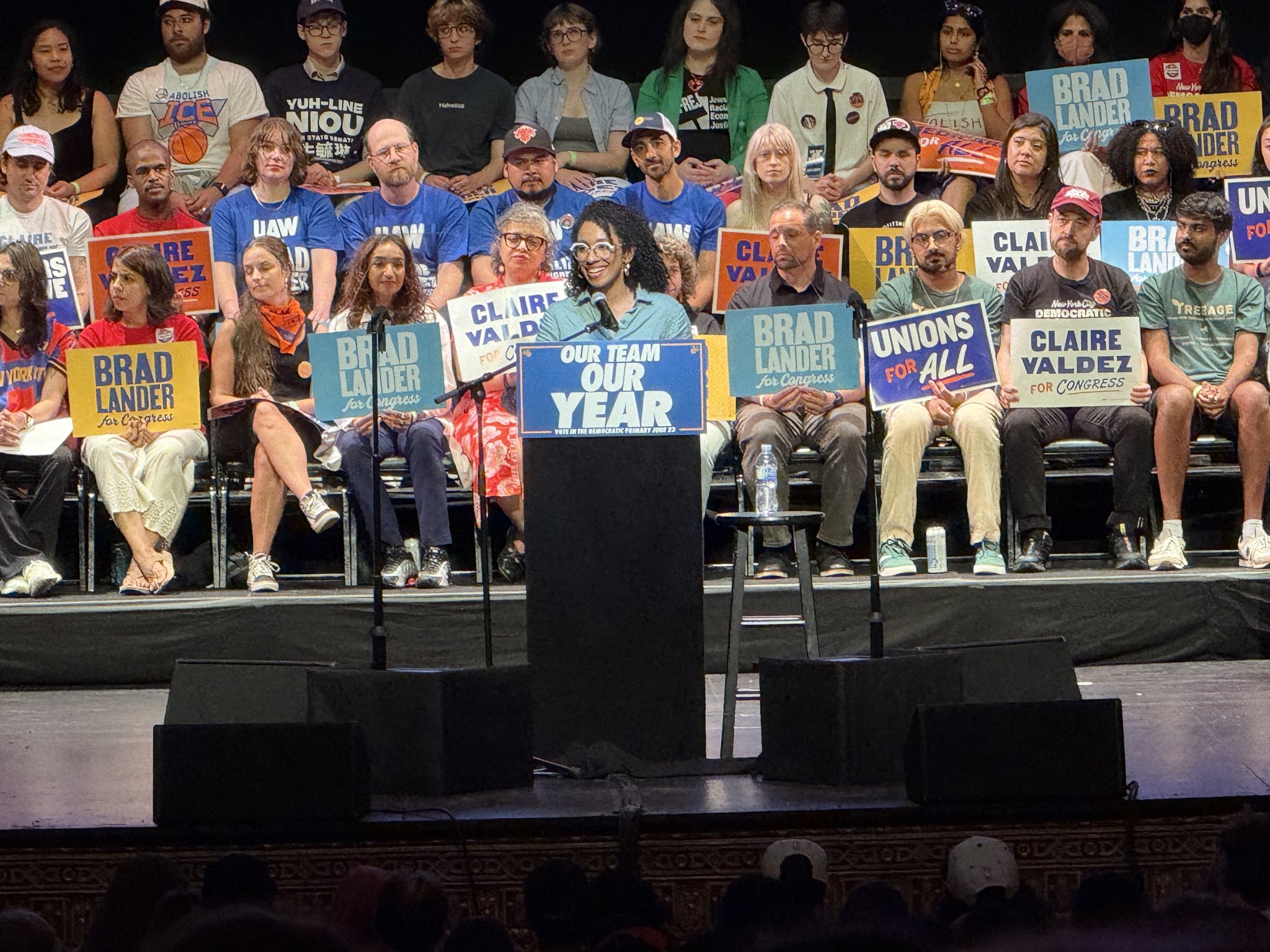
In the house, “the Squad” has grown substantially. Together with other progressive members of the Democratic caucus, it will now wield influence that centrist Democrats can no longer ignore. The comfortable re-election of New York Congresswoman Alexandria Ocasio-Cortez, also a DSA member, to a fifth term – and early talk of her as a presidential contender –reflects that shift. New York Mayor Zohran Mamdani’s influence, meanwhile, now extends well beyond his city: three progressive New York state candidates, including two DSA members, won their primaries with his backing and were elected on Tuesday night.
Another centrist argument has also been refuted. Until this week, the conventional wisdom was that left-wing candidates could win only where Democrats were already dominant. When democratic socialist Angie Nixon won her primary in Florida, centrists threw up their hands in horror. On election night, however, she lost by only a narrow margin – in a state Trump had carried by 13 points in 2024. In Michigan, Abdul El-Sayed, a candidate from the party’s left wing, won despite warnings from the Democratic establishment.
Democratic strategist Mo Elleithee summed up the mood on election night: “They call us Marxists and socialists, but voters don’t care. They want to know: ‘Are you going to bring down food and gas prices or not?’”
What Can a Democratic Congress Do Against Trump?
Yet the fight against Trump’s MAGA movement has not been won, nor is it over. The president has so far paid little heed to Congress, governing chiefly by executive order. As commander in chief, he will remain largely unconstrained in foreign policy. But Congress can now launch investigations, initiate impeachment proceedings – including against Defense Secretary Pete Hegseth – and the Senate can block Trump nominees.
Tuesday night sent a message, at home and abroad: the rise of the right can be stopped. In both parties, the race for 2028 has already begun. For Republicans, the question is who will lead the Trump movement after Trump. Among Democrats, the party is wrestling with how to define itself –and the left enters that contest from a position of strength.
Stefan Liebich is the director of Rosa Luxemburg Foundation’s New York Office.
Photo: Conlan Houston